
Best Resources to Learn Apartment Syndication (2026 Guide)
Apartment syndication is a strong way to build wealth in real estate. But it mixes many complex skills into one business.These skills include underwriting, due diligence, raising capital, investor relations, and asset management. The fastest way to build real skill is to pair great education with a community of people doing deals. This guide goes over the best resources to learn apartment syndication, including: books, podcasts, courses, events, communities and more. Figure out which is best for you or try them all. Explore free resources as well as paid if you’re looking to jumpstart your learning.
Start Here: A Free Introduction to Apartment Syndication
If you want a structured, step-by-step introduction to how syndications work, start with Rod Khleif’s free Guide to Multifamily Syndications. It covers the fundamentals of deal structure, GP/LP roles, capital raising basics, and how syndications create returns for investors.
➡ Download the Free Syndication Guide
Best Books on Apartment Syndication
Books are the best way to go from big-picture understanding to a repeatable playbook. These titles are referenced constantly by active operators and LPs because they cover the full lifecycle of a syndication — from sourcing and underwriting to capital structure, investor relations, and execution.
Foundational Syndication Books
-
- How to Create Lifetime CashFlow Through Multifamily Properties by Rod Khleif – A comprehensive guide covering syndication fundamentals, multifamily investing principles, underwriting, and building a portfolio. Available at .
- The Best Ever Apartment Syndication Book by Joe Fairless & Theo Hicks – Step-by-step systems for running a first syndication, with heavy emphasis on marketing, investor relations, and building a platform.
- The Hands-Off Investor by Brian Burke – The gold standard for passive investors learning to evaluate sponsors, deal structures, fee arrangements, and risk. Essential reading even for aspiring GPs.
Value-Add and Operations
- Multi-Family Millions by David Lindahl – Repositioning strategies, value-add execution, and market cycle timing. One of the most frequently recommended books by experienced operators.
- Crushing It in Apartments and Commercial Real Estate by Brian Murray – Practical, beginner-friendly guidance on buying and operating commercial properties. Good for investors transitioning from single-family.
- The ABCs of Real Estate Investing by Ken McElroy – Core fundamentals that underpin all multifamily investing. A strong starting point if you’re brand new to the space.
Top Podcasts for Apartment Syndication Education
Podcasts build pattern recognition through daily repetition. These shows keep you close to the front lines, including market shifts, debt realities, capital raising strategies, and asset management decisions, so your judgment improves even before your first deal.
-
- Lifetime CashFlow Through Real Estate Investing is hosted by Rod Khleif. It is one of the longest-running and most downloaded multifamily podcasts. It has 900+ episodes. Topics include syndication, mindset, and underwriting. It also shares real student deal breakdowns.
- The Best Ever CRE Show hosted by Joe Fairless – Daily commercial real estate insights with a deep library of syndication-focused interviews.
- The Real Estate Syndication Show hosted by Whitney Sewell – Deep dives with active syndicators covering deal sourcing, capital raising, and operations.
- Financial Freedom with Real Estate Investing hosted by Michael Blank – Focused on apartment building investing, quitting a W-2, and scaling through syndication.
- Multifamily Insights hosted by John Casmon – Market research, finding deals, and raising capital, with a focus on actionable takeaways.
- Multifamily Investor Nation hosted by Dan Handford – Interviews focused on how real deals actually got found, funded, and closed.
Online Courses and Training Programs for Apartment Syndication
Knowing how a syndication works and actually closing one are two very different things. Courses bridge that gap by giving you underwriting templates, deal models, and real case studies you can practice with before real money is on the line. The programs worth your time combine a structured curriculum with accountability. Most people get stuck between understanding a concept and making their first offer.
Below are the best options organized by where you are right now.
Free Resources to Start Today
These cost nothing and can keep you learning for weeks before you spend a dollar on formal training:
- Rod Khleif’s Free Guide to Multifamily Syndications – This is the single best free starting point for understanding how syndications actually work. It walks through deal structure, the roles of GPs and LPs, how capital is raised, how returns are distributed, and what the timeline of a real syndication looks like from start to finish. Read this before anything else.
- Rod Khleif’s Free Goal Setting Workshop – Most investors skip this step and regret it later. Before you learn underwriting formulas, get clear on why you’re doing this, what your target number is, and what kind of investing life you’re actually building toward. Rod’s workshop is based on the same goal-setting and visualization methods he used to rebuild after losing $50 million in 2008.
- Beginner Resources Library – A curated collection of articles, videos, and tools on rodkhleif.com specifically organized for investors who are just getting started in multifamily.
- Rod Khleif’s Skool Community – A free and low cost education platform with some of Rod’s best education resources available for free.
- Udemy: Real Estate Syndication for Beginners – A low-cost overview if you want a broad, structured introduction to syndication concepts before committing to a deeper program. Good for visual learners who prefer video-based courses.
Structured Courses for Building Real Skills
Once you know the basics, these programs help you build real skills. They cover underwriting, deal analysis, and capital raising. These skills help you close deals
- Rod Khleif’s Online Courses – Self-paced training covering multifamily underwriting, syndication mechanics, asset management, and operations. Designed so you can go at your own speed while still building practical, deal-ready skills. A good bridge between the free resources and full mentorship.
- The Real Estate Guys: Secrets of Successful Syndication – A live training program focused specifically on raising capital and structuring syndication deals. Best suited for investors who already understand the fundamentals and are ready to focus on the capital-raising side of the business.
Mentorship Programs That Accelerate Execution
The difference between courses and mentorship is simple: courses teach you what to do, mentorship makes sure you actually do it. If you’re serious about closing your first syndication in the next 12 months, a mentorship program with active deal flow and real accountability will compress your timeline dramatically.
- Rod Khleif’s Warrior Program – This is Rod’s flagship mentorship community, and it’s built for investors who are done learning passively and ready to execute. Members get weekly coaching calls. They also get access to active deal flow. Members receive underwriting reviews and capital raising support. They get KP matching and a peer investor network. These investors are closing deals, not just talking about them. Warrior members have collectively acquired over 260,000 units. Warrior receive a real sword after closing their first multifamily deal. Read Warrior Program reviews →

Live Events and Networking That Lead to Deals
Deals come from relationships. Prioritize events with concentrated operator attendance, breakout sessions designed for introductions, and follow-up channels to maintain momentum after the event ends.
Multifamily-Focused Events
- Rod’s Multifamily Bootcamp – Two immersive days of underwriting workshops, capital raising training, team-building sessions, and direct networking with active multifamily investors. .
- Best Ever Conference – Three days of investor and operator networking with programming focused on syndication, capital raising, and scaling.
- NMHC Annual Meeting – The institutional-level multifamily conference. Ideal for investors scaling into larger deals.
Ongoing Communities
- BiggerPockets Forums – Always-on networking, deal discussion, and market Q&A. Good for building relationships between live events.
- Bisnow Multifamily Annual Conference (BMAC) -Regional market intelligence and networking with brokers, lenders, and operators.
Free Tools for Underwriting and Deal Analysis
You don’t need expensive software to start analyzing deals. In fact, some of the best investors sharpen their skills using simple tools and consistent practice. These free resources from Rod Khleif will help you build real underwriting confidence while you’re learning:
-
Multifamily Cap Rate Calculator – Quickly calculate cap rates to compare properties and markets so you can determine whether a deal is priced appropriately.
-
Free Multifamily Deal Analyzer – A more comprehensive underwriting tool for analyzing apartment deals, including cash flow, returns, and key performance metrics.
-
Commercial Property Deal Analyzer – Designed for analyzing commercial properties beyond multifamily, including office, retail, and mixed-use assets.
-
Multifamily Due Diligence Checklist – A comprehensive checklist for evaluating properties before closing, helping you avoid costly surprises after you take ownership.
Learn by Investing Passively First
If you have capital but limited bandwidth, a passive LP investment with a vetted sponsor lets you observe the full syndication process from the inside: real PPMs, investor portals, quarterly reporting, asset management updates, and business plan execution.
Some investors begin on crowdfunding platforms like Fundrise, then transition to direct syndications as their network and knowledge grow. Pair LP experience with education so you can intelligently evaluate fee structures, waterfalls, reserves, and risk controls before sponsoring deals yourself.
Your 30-60-90 Day Apartment Syndication Learning Plan
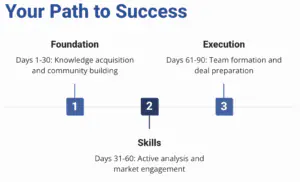
Don’t just collect resources, follow this structured plan to move from learning to doing.
Days 1-30: Build Your Foundation
- Read one foundational book
- Download and study the Guide to Apartment Syndication.
- Binge 10-15 relevant episodes of the focused on syndication basics
- Join Rod Khleif’s Skool Community and introduce yourself with a clear target market and buy box
- Clarify your Investing Vision
Days 31-60: Start Building Skills
- Attend a live training like the Multifamily Bootcamp.
- Complete an underwriting course or use the deal analyzer to analyze at least 3 deals per week
- Begin weekly broker outreach in your target market
- Study 3–5 to see how real syndications were structured
Days 61-90: Move Toward Execution
- Formalize your team: KP (Key Principal), property manager, general contractor, attorney
- Choose a capital-raising CRM and begin building your investor list
- If appropriate, make a small LP allocation to observe best practices firsthand
- If you want high-accountability mentorship and a peer group that pushes you to execute,
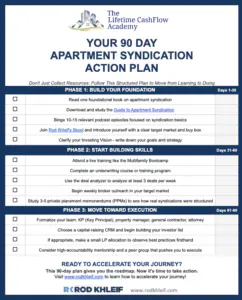
Click here to view the Free Rod Khleif 90 Day Apartment Syndication Action Plan Checklist.
Here’s a link to the Google Sheet’s version if you’d like to make your own edits.
Why Thousands of Investors Learn Apartment Syndication with Rod Khleif
Rod Khleif’s platform is uniquely designed to take investors from first learning about syndication to actually closing deals. Unlike programs that focus on only one piece of the puzzle, Rod’s ecosystem combines mindset coaching, step-by-step multifamily mechanics, and a momentum-building community:
- Mindset first: Rod’s own story of losing $50 million in 2008 and rebuilding from zero gives him a perspective on resilience, conservative underwriting, and risk management that most educators can’t match. His personal experience teaches investors how to think long term and protect their capital through market cycles.
- A free starting point: The free syndication guide and 900+ podcast episodes mean you can learn for months without spending a dollar. This extensive free education lets you build foundational knowledge before making any financial commitment.
- Implementation-heavy training: The Multifamily Bootcamp isn’t theory. It’s hands-on underwriting workshops, capital raising practice sessions, and team-building exercises with active investors who are working on real deals right now.
- A community that closes deals: Warrior Program members have collectively acquired over 260,000 units. These aren’t just students sitting in a classroom. They’re active operators who are finding deals, raising capital, and building portfolios. See their success stories here.
- Purpose-driven investing: Rod’s Tiny Hands Foundation connects investor success to giving back, attracting a values-aligned community that invests with integrity. Members don’t just build wealth for themselves. They create positive impact in the world.

Frequently Asked Questions About Learning Apartment Syndication
How long does it take to learn apartment syndication?
Most investors spend 3-6 months building foundational knowledge through books, podcasts, and a structured course before analyzing their first real deals. With focused effort and mentorship, many close their first syndication within 12-18 months of starting.
Can I learn apartment syndication for free?
Yes. Rod Khleif’s free syndication guide, the Lifetime CashFlow Podcast (900+ episodes), Skool Community, and tools like the deal analyzer provide hundreds of hours of free education.
What’s the difference between a GP and an LP in a syndication?
The General Partner (GP) finds, operates, and manages the deal. The Limited Partner (LP) invests capital passively and receives returns without day-to-day responsibilities. Most syndication education focuses on the GP role, though understanding the LP perspective is essential for raising capital.
Click here for a deeper dive on the difference between GP and LP.
Do I need a lot of money to start syndicating apartments?
Not necessarily. As a GP, you’re raising capital from investors rather than funding deals yourself. Many successful syndicators started with limited personal capital but strong knowledge, networks, and a Key Principal (KP) partner. The expert mentor, Rod Khleif, has the world famous Warrior Program, which helps members find KPs and capital partners.
What’s the best first step for a complete beginner?
Download the free syndication guide, read one foundational book, and listen to 10 episodes of the Lifetime CashFlow Podcast. That combination gives you enough foundation to decide whether syndication is the right path for you.
What is a Key Principal (KP) and do I need one?
A Key Principal is an experienced operator who meets lender requirements for net worth and liquidity. Most first-time syndicators partner with a KP to qualify for financing. As you build your portfolio and net worth, you can eventually become your own KP.
How much money do I need to raise for my first syndication?
This varies based on deal size, but most first syndications raise between $500,000 to $2 million in equity. Start by building relationships with potential investors early, before you have a deal. This helps you estimate how much capital you can access when the right opportunity appears.
What’s the difference between a course and a mentorship program?
Courses provide information and teach you what to do. Mentorship programs like the Warrior Program provide accountability, deal reviews, active networking, KP matching, and ongoing support to ensure you actually execute. Most successful syndicators use both.
Should I invest as a passive LP before becoming a GP?
If you have capital available, yes. Passive investing gives you firsthand exposure to PPMs, investor relations, quarterly reporting, and deal execution. You’ll learn what good sponsors do right and what mistakes to avoid when you become a GP yourself.
What are the biggest mistakes new syndicators make?
The most common mistakes include: overestimating renovation timelines and budgets, underestimating operating expenses, raising capital before finding a deal (illegal without proper securities registration), partnering with the wrong people, and failing to build investor relationships before needing capital.
Do I need a real estate license to syndicate apartments?
No. You don’t need a real estate license to syndicate deals. However, you will need to work with qualified securities attorneys to ensure proper SEC compliance, create offering documents, and structure your syndication legally.
What markets are best for apartment syndication?
Strong syndication markets typically have population growth, job diversity, landlord-friendly laws, and positive rent-to-income ratios. Popular markets include Texas (Dallas, Austin, San Antonio), Florida (Tampa, Jacksonville), the Carolinas (Charlotte, Raleigh), and the Southeast. However, the best market is one where you can build relationships with brokers, property managers, and lenders.
How do I find deals that aren’t already picked over?
Build direct relationships with commercial brokers in your target market through consistent outreach, market visits, and demonstrating you’re a serious buyer. Off-market deals come from relationships, not online listings. The Multifamily Bootcamp teaches specific broker outreach strategies that work.
What if I don’t have a network of investors yet?
Start building one now, before you need it. Share educational content, host webinars, join real estate investing groups, and add value to your network first. The capital raising courses teach systematic approaches to building an investor database from scratch.
Ready to Start Learning Apartment Syndication?
Here are your next steps, no matter where you are in your journey:
- Download the free syndication guide and read it this week.
- Subscribe to the Lifetime CashFlow Podcast and queue five episodes relevant to your next milestone.
- Register for the Multifamily Bootcamp for immersive, hands-on training.
- Apply to the Warrior Program if you’re ready for high-accountability mentorship and a community of active operators.
