How Edward Song Built a Multifamily Real Estate Development Business
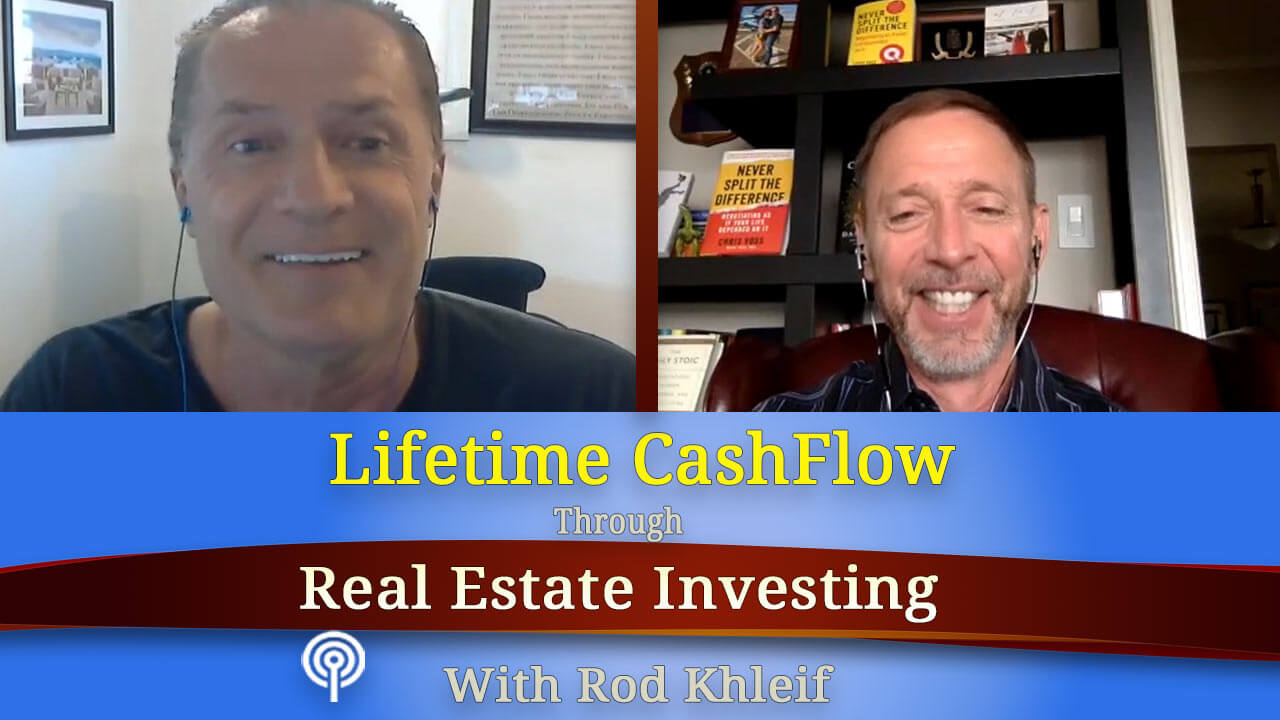
In this episode of Own Your Power, Edward Song shares how he transitioned from investment banking and education into multifamily real estate development and commercial investing. His journey highlights how entrepreneurial thinking, operational efficiency, and strategic partnerships can create major opportunities in today’s real estate market.
Edward discusses how his early background in finance and management consulting helped him understand business fundamentals, while his experience in construction gave him a direct path into real estate development. Over time, he combined those skill sets to build a vertically integrated real estate operation focused primarily on multifamily properties throughout New Jersey and the surrounding tri state area.
The Power of Value Add Commercial Real Estate
One of the biggest lessons from the conversation is how value add opportunities can dramatically increase property value when operators understand their market deeply. Edward explains his first major commercial real estate acquisition, a 25,000 square foot property in New Brunswick, New Jersey occupied by a long term government tenant.
The investment group acquired the property for approximately $5.7 million in cash and identified an overlooked opportunity: the tenant’s lease rates had not been adjusted to market rents for more than a decade. After renegotiating the lease, the property’s net operating income increased significantly, pushing the building’s estimated value to over $10 million within months of acquisition.
This example demonstrates a core principle in multifamily real estate development and commercial investing: increasing NOI creates substantial equity growth, especially when investors acquire under managed or underperforming assets.
Why Vertical Integration Matters in Multifamily Real Estate Development
Edward emphasizes that one of the keys to long term success in multifamily real estate development is vertical integration. Instead of relying heavily on third party vendors, his team controls multiple parts of the investment and development process internally.
Their operation includes:
- Construction management
- Asset management
- Property management
- Architectural partnerships
- Development oversight
By keeping these systems in house, Edward believes they can reduce costs, improve execution speed, and better manage risk for investors. This approach also gives the company more flexibility when evaluating new acquisitions or ground up development opportunities.
Rod Khleif points out during the conversation that many of the most successful real estate operators in the country share two traits: they stay geographically focused and vertically integrated. Edward’s strategy reflects both of those principles.
Building Multifamily Projects in New Jersey
Another major topic discussed is the opportunity within New Jersey multifamily development. While some investors avoid the Northeast because of regulation and political complexity, Edward believes local expertise creates a competitive advantage.
His company currently owns and operates multiple multifamily assets in the New Brunswick and Somerset markets, including a 77 unit property with commercial space and a 94 unit development project. Because the portfolio is concentrated geographically, the company benefits from operational efficiencies and stronger market knowledge.
Edward also shares details about a much larger mixed use development project currently in the planning stages. The proposed project could exceed 600 units and include retail and office components. To execute a project of that scale, his team partnered with a larger institutional level developer experienced in high rise construction and entitlement processes.
The discussion offers valuable insight into how experienced operators scale from smaller multifamily projects into larger institutional caliber developments.
Affordable Housing and Long Term Market Demand
Edward also discusses his growing interest in affordable housing development opportunities throughout New Jersey. Rising housing costs and limited supply continue to create demand for workforce and affordable housing across many major markets.
He explains that his team is actively exploring ways to combine their construction expertise, development experience, and operational systems to help address the housing shortage while still creating strong investment opportunities. For investors looking ahead to future real estate trends, affordable housing remains an increasingly important sector within multifamily real estate development.
About Edward Song
Edward Song is a multifamily investor, developer, and entrepreneur based in New Jersey. Before entering real estate full time, he worked in investment banking, education, and management consulting. He also founded Five Points Learning, an educational company serving students and families throughout New York City.
Today, Edward focuses on multifamily real estate development, commercial acquisitions, and vertically integrated operations across New Jersey and the surrounding East Coast markets. His portfolio includes multifamily communities, mixed use developments, and large scale entitlement projects.
If you want to hear the full conversation and detailed insights, watch the podcast video or read the complete transcript below.
FAQ About Multifamily Real Estate Development
What is multifamily real estate development?
Multifamily real estate development is the process of building, renovating, or repositioning residential properties that contain multiple housing units. These projects can include apartment communities, mixed use developments, workforce housing, and luxury rental properties. Investors and developers generate returns through rental income, property appreciation, and increased asset value created during development or renovation.
Why is multifamily real estate development attractive to investors?
Multifamily real estate development attracts investors because it offers the potential for strong cash flow, long term appreciation, and scalable income. Demand for rental housing continues to grow in many markets due to rising home prices, population growth, and affordability challenges. Multifamily properties also provide operational efficiencies since multiple units are managed within one asset.
What is a value add multifamily real estate development strategy?
A value add multifamily real estate development strategy focuses on improving a property’s performance through renovations, operational upgrades, lease restructuring, or repositioning. Investors aim to increase net operating income by improving the property and raising rents to market levels. As NOI increases, the overall value of the property can rise significantly.
How does vertical integration help multifamily real estate developers?
Vertical integration allows multifamily real estate developers to control multiple aspects of a project internally, including construction, property management, asset management, and development oversight. This approach can reduce costs, improve communication, increase efficiency, and help developers manage risk more effectively. Many experienced operators use vertical integration to scale their portfolios and improve project execution.
What markets are best for multifamily real estate development?
The best markets for multifamily real estate development are typically areas with strong population growth, job creation, limited housing supply, and increasing rental demand. Investors often look for regions with expanding economies, favorable demographics, and infrastructure improvements. Local market knowledge is critical because regulations, zoning, and construction costs can vary significantly by location.
What is the difference between multifamily investing and multifamily development?
Multifamily investing usually involves acquiring existing apartment properties that already generate income, while multifamily development focuses on building new projects or substantially redeveloping properties. Development projects generally carry higher risk but can also offer greater returns through forced appreciation and equity creation.
How do developers finance multifamily real estate development projects?
Developers typically finance multifamily real estate development projects using a combination of debt and equity. Equity may come from private investors, syndications, family offices, or institutional partners, while debt financing often comes from banks, agency lenders, or construction lenders. Larger projects may also involve joint venture partnerships with experienced developers or private equity firms.
Why is affordable housing important in multifamily real estate development?
Affordable housing has become a major focus in multifamily real estate development because many markets face significant housing shortages and rising rental costs. Developers who focus on workforce and affordable housing can help meet community demand while benefiting from long term occupancy stability and government supported incentives in certain markets.
What are the biggest risks in multifamily real estate development?
Some of the biggest risks in multifamily real estate development include rising construction costs, interest rate fluctuations, zoning delays, financing challenges, and market shifts. Successful developers reduce these risks by conducting thorough market research, building strong operational teams, and maintaining conservative financial assumptions.
How can someone get started in multifamily real estate development?
Many investors begin by learning underwriting, market analysis, and property operations before partnering with experienced operators on smaller projects. Networking, mentorship, and education are essential for understanding financing, construction, entitlements, and asset management. Some investors start with smaller multifamily acquisitions before transitioning into larger development opportunities.
00:00:28:23 – 00:00:47:11
Rod Khleif
Welcome back to Multifamily Rockstars. As you guys know, this is where we dive deep into our guests deals and give you practical and actionable tips so you can actually go out and do your first deal. Today I’ve got Warrior Edward song on and he has done some big things and I’m really glad to have him on Edward, welcome.
00:00:47:13 – 00:00:51:07
Edward Song
Oh thank you, I appreciate it. Excited to be on super.
00:00:51:07 – 00:01:04:12
Rod Khleif
So why don’t you give us a little background on, you know, where you came from. What was your you know, what what field you were in before you got into real estate and, why real estate and kind of bring us current, if you would.
00:01:04:14 – 00:01:28:02
Edward Song
Yeah, sure. Absolutely. So, I started my professional career in finance, actually, and so I was an investment banking in San Francisco during the.com bubble in 2000. And so kind of got to see that craziness. And, I left that in about 2002 and, moved back to the East Coast, where I went, where I grew up.
00:01:28:02 – 00:01:42:00
Edward Song
And, actually took a change in careers and went into education, was looking for something more fulfilling, from finance and so, you know, not a lot of people do that. But for me, that’s kind of what I was looking for at that. The big.
00:01:42:00 – 00:01:43:00
Rod Khleif
Pay cut.
00:01:43:02 – 00:02:03:03
Edward Song
Yeah. Massive. And so, but yeah, so I ended up actually working for a subsidiary of Kaplan and ran a couple of their programs and got to see, you know, how to run a business, kind of the way they do it. And had a chance to work with a lot of students and families. And, you know, it was really fulfilling work.
00:02:03:03 – 00:02:22:14
Edward Song
And then I eventually went and got my masters, in education. And, it was kind of like my late 20s where I decided I would give business a try again and went into management consulting and ended up at Deloitte, for a few years. And around that time I realized that I’m not really a big corporate business guy.
00:02:22:20 – 00:02:45:21
Edward Song
And, I’ve always wanted to start my own business. My family are all entrepreneurs. My father had a large, manufacturing business, where he manufactured clothes, all throughout Asia and had offices all around the world. My sister runs a human rights nonprofit, called in North Korea. She’s been doing it for close to 20 years.
00:02:45:23 – 00:02:56:03
Edward Song
My brother has a startup, called health ECS. And so their work, he’s working on trying to solve certain health related problems. And so I think it’s just in our DNA. Right.
00:02:56:04 – 00:03:01:05
Rod Khleif
Wow. Yes. Sorry. I gotta stop you for a second. Your sister has a nonprofit in North Korea.
00:03:01:07 – 00:03:23:23
Edward Song
No. So it’s called Liberty in North Korea. And what they do is they have at one time they used to rescue, and resettle, refugees who escaped from North Korea. And so they provide, education, and career and language type training. And so they have rescued, I think it’s over a thousand people, over the last 20 years.
00:03:23:23 – 00:03:44:06
Edward Song
And it’s really inspiring. And it’s one of the biggest, it’s one of, the nonprofits that I donate the most to, one is my sister. But also, I’m compelled by the mission. And my, great. My grandmother is actually from North Korea. And so we do have a personal connection there. And so there’s a whole. I could talk about that for hours.
00:03:44:08 – 00:03:50:15
Rod Khleif
Well, I was just fascinated when you said North Korea. I’m like, what? Are you kidding? Wow. Okay. Very cool, very cool.
00:03:50:20 – 00:04:09:18
Edward Song
Yeah. So I had left a lot. I was looking for something more. I always knew I wanted to start my own business. And so, and I had this idea that I wanted to continue to, you know, make a positive difference in the community that I was in. And so I started Five Points Learning, which is based out of Brooklyn.
00:04:09:20 – 00:04:32:14
Edward Song
And we started to work with a lot of different, families and students within Brooklyn. We started to work with the Department of Education. We work with nonprofits that serve low income communities. We work with charter schools, private schools, public schools, you name it. Right. And so 17 years later, I still own it today. I’ve got a manager that manages the program, and I check in with him.
00:04:32:14 – 00:04:47:24
Edward Song
We discuss different, you know, situations or problems that we solve together. But yeah, I mean, it’s been exciting to have impacted thousands and thousands of kids in New York City and help them reach their academic goals. And, you know, getting closer to their dreams. Right?
00:04:47:24 – 00:04:52:08
Rod Khleif
Oh, that’s beautiful work, brother, as I commend you. That is absolutely beautiful work.
00:04:52:10 – 00:04:53:10
Edward Song
I appreciate that. Yeah.
00:04:53:10 – 00:04:55:13
Rod Khleif
So why real estate?
00:04:55:15 – 00:05:15:03
Edward Song
Yeah. So I mean, basically then, you know, I had ended up moving to new Jersey after I had my three kids and, got into construction, through a friend of mine and, you know, really went deep into it and, you know, loved every part of it. And, you know, we were building houses, you know, we’re doing commercial projects.
00:05:15:03 – 00:05:34:05
Edward Song
We’re doing all kinds of, you know, even looking at multifamily things. And so, it kind of is a natural progression then to understanding like the real estate development side. Right? And so, at that time, I kind of felt like it was, you know, kind of untouchable. Like, I see all these buildings, I see these developers.
00:05:34:05 – 00:05:55:21
Edward Song
It’s like the secret sauce. How do I access that secret knowledge? And, I was fortunate that I ran into somebody who, was a developer and kind of took me under his wing and, and kind of showed me the ropes. And that was my first introduction to real estate development. And as I, you know, got into real estate development, I just wanted to learn more.
00:05:56:01 – 00:06:20:19
Edward Song
And that’s when I started to follow, actually your podcast. And so, you know, I would drive around to all these different projects, I’d have your podcast on in the car and, you know, through the podcast, I just learned so much. And what I loved about it was just the energy you had with your guests. But there was one particular episode where you had a guest that was talking about, a situation that when kind of bad, it went south.
00:06:20:19 – 00:06:36:15
Edward Song
And, what impressed me was, you know, the, the guest had said that, you know, this this partner of his had done something shady, and you got really upset. He said, oh, was he a warrior? Or if he’s a warrior, I’m going to kick him out like, oh. And I was like, wow, rod really got upset.
00:06:36:15 – 00:06:58:03
Edward Song
Like, that’s crazy. But it showed me how you really protected the community. You cared about finding the right people to join and people of high character, people who, you know, really care about supporting the community, contributing to community. And so that kind of gave me the confidence to then reach out. And so I reached out literally the next day, had a conversation and joined pretty much.
00:06:58:03 – 00:06:58:14
Edward Song
Right.
00:06:58:14 – 00:07:27:06
Rod Khleif
Wow, wow. I didn’t know that. That’s really cool. I that’s really I’m really glad that you said that. All that because, yeah. I mean, listen, you know, and not to derail the conversation, but, we take making the world better very seriously in the warrior program. I mean, you know, we have our Hall of Fame awards, and I remember having that and, and every single warrior that we that we gave the award to have done, I don’t know, 1040 or 50 of them at this point.
00:07:27:08 – 00:07:46:05
Rod Khleif
Did something philanthropic as this like crazy. I couldn’t believe it. And it just it was just a, just a common denominator in these warriors that we selected. We didn’t know it, you know, while we were selecting them, but we selected them because they did add value to the community. They were responsive and answered questions for people and help people.
00:07:46:05 – 00:08:02:23
Rod Khleif
And and, you know, it’s just it was pretty astounding to see that. But, no, thank you for sharing that. So. Well, let’s get let’s get into a deal. Okay. So, yeah, when I, when you, we had you do some notes, you talked about your first commercial real estate deal. Can you tell us about that one?
00:08:03:00 – 00:08:24:22
Edward Song
Yeah. So this was my first deal. You know, I was involved with, capital raising, and, it was a commercial project, in, New Brunswick, new Jersey. It’s a 25,000 square foot space, and there’s, a county tenant that’s in there. And so, the tenant had been in there for, I mean, over 20 years.
00:08:24:24 – 00:08:25:16
Edward Song
And you say.
00:08:25:16 – 00:08:28:17
Rod Khleif
County tenant, so, so governmental tendu tenant.
00:08:28:23 – 00:08:30:23
Edward Song
Right. A government tenant. That’s right. Gotcha.
00:08:30:24 – 00:08:32:01
Rod Khleif
Okay.
00:08:32:03 – 00:08:58:06
Edward Song
And so they had been in that building for over 20 years, and, they hadn’t really had, any lease, increases, in quite some time in over ten years. And so, when we came, to the property through our broker, we were able to see where there was an opportunity to, possibly renegotiate the lease, and add some value to the building for our investors.
00:08:58:08 – 00:09:21:17
Edward Song
And so that’s basically what we did is after we had closed, we sent a letter to the county notifying them that we were going to, raise their rents up to market rates. And after some negotiations, we were able to do that. And so we had bought that property for around 5.7 million in cash. And, after we renegotiate renegotiated, we were able to increase our NOI.
00:09:21:17 – 00:09:28:01
Edward Song
And based on the cap rate there, the value of the building is now around ten, $10.5 million. And.
00:09:28:01 – 00:09:32:02
Rod Khleif
This was this was over what period of time? I mean, like, when did you buy it?
00:09:32:04 – 00:09:52:09
Edward Song
So we actually closed, at the end of 2024. And when the lease, it took about six months or so to sign the lease. And so we were going to refi out, our proceeds. But, we were kind of waiting for interest rates to drop to see if we could maybe do a little bit more.
00:09:52:11 – 00:10:15:21
Edward Song
And, we’re kind of still in that holding pattern right now. We don’t really have a lot of urgency for pulling the money out. And so as it is, that cash flows really well. And so, and also there’s some other opportunities for that project that we’re exploring. And so, but yeah, I mean, in general, you know, we predominantly develop in new Jersey and so.
00:10:15:23 – 00:10:28:01
Rod Khleif
But this wasn’t a this wasn’t a development project. This was a project. Right. And, and and you paid cash. So you raised that much cash to go do this deal. Was it a syndication?
00:10:28:03 – 00:10:45:00
Edward Song
It was a joint venture. It was a syndication. Yes. Okay. We had one we had one investor that provided a large portion of it. Then, my family, myself and I, my wife and I, we invested in that one to, we also brought in a few other, investors as well.
00:10:45:02 – 00:11:01:02
Rod Khleif
Perfect, perfect, perfect. So, so you got the rents up and you basically doubled the value. That’s that’s fantastic. So what’s next? Are you going to are you going to, be developing or looking for more assets like this one? What what’s what’s, anything on the radar?
00:11:01:04 – 00:11:24:05
Edward Song
Yeah, I think we’re always looking for value add opportunities and so, you know, one of the things that we have focused on is getting vertically integrated. And so I’ve actually partnered with, a warrior, who was an architect. And so, we have worked together to try to bring some synergies together in our two businesses. And because I have the construction business.
00:11:24:05 – 00:11:39:24
Edward Song
Right. That’s something that we’re able to take care of. We’ve got asset management and property management, also in-house. And so for us, we’re just trying to control as much as we can within the process, so that we don’t have to depend as much on third parties.
00:11:40:01 – 00:11:42:10
Rod Khleif
Geographically specific in new Jersey, then.
00:11:42:12 – 00:12:02:08
Edward Song
Yeah, new Jersey. We also look into Pennsylvania. Okay, kind of the surrounding tri state area. And so I know a lot of times people are a little bit afraid of, of that, of that area. But, for us, we understand the market really well. We have a lot of experience in it, and we’ve got a lot of, efficiencies already in place.
00:12:02:10 – 00:12:06:08
Edward Song
And so we feel like that helps mitigate our risk and our investors risk as well.
00:12:06:08 – 00:12:22:10
Rod Khleif
So, so, so is the plan is the plan to, to build more or buy more or the answer is yes in both cases. What what is what’s what’s the because I mean with an architect I’m thinking construction, you know, that you’re going to build. And I assume you’re a GC. Are you a general contractor then personally.
00:12:22:12 – 00:12:48:20
Edward Song
I mean, my partner is the general contractor. Okay. You got a lot of business side. And so, but yeah, he’s the technical guy. He knows all the code, all that stuff. Okay. But, yeah, I mean, we will do ground up construction. We’re always looking for opportunities. We have our, you know, build cost, optimize. And so we’re able to build that out, you know, a price that’s lower than maybe other developers, who have to party that out.
00:12:48:22 – 00:13:01:00
Edward Song
And then, like I said, we’re opportunistic. So if there are other commercial opportunities or value add opportunities and then we’re going to explore it. Right. And so, anything related to multifamily predominantly.
00:13:01:02 – 00:13:21:21
Rod Khleif
Okay. Okay. That was my question. Yeah. If there’s going to be a multifamily focus or, you know, we’ve got warriors that are doing an industrial flex space very successfully. I’m sure you know that, you know, we’ve they’ve even built student housing, some development there. So, but you’re going to focus on primarily some multifamily, then multifamily.
00:13:21:21 – 00:13:50:22
Edward Song
And I mean, we’ve explored like looking into, affordable housing because it’s such a big issue in new Jersey. So there’s some opportunities that we’ve seen and we’re still kind of in the early stages. And I’m still looking to connect with people who have experience in that space, actually in new Jersey. And so, so, you know, that’s kind of the next path, I think, for us to take to try to solve that problem and, bring our synergies to that, that that’s love it.
00:13:50:22 – 00:14:15:15
Rod Khleif
Well, I mean, you’re putting all the pieces together and that that I will tell you. And I’ve said this publicly before, the most successful operators I see are the ones that are geographically specific, like you are and vertically integrate. Those are the most successful operators. I see across the country every single time. Yeah, because you get your eyes on it, you know you’re there, you can kick it, touch it and keep an eye on it where, you know, if you’re out of state, it’s, it’s a it’s a little more challenging.
00:14:15:15 – 00:14:34:17
Rod Khleif
Can you do it? Yes. I’ve got assets in seven states, but it’s not ideal. Ideal would be geographically specific. So I love I love the idea and I don’t love the politics up there. But you know that that’s that’s that’s on you. But but anyway. But I know you can make money and you can make a lot of money, as evidenced by this deal you just mentioned.
00:14:34:23 – 00:15:00:22
Rod Khleif
So, so are you actively looking for land or, you know, what’s, what’s talk a little bit about about what you’re putting your sites into to try to identify opportunities. If you would talk a little bit about, you know, what you might be looking at, to maximize, you know, your reach and, and kick, as many, you know, have as many as, as much stuff come across your desk as possible, I guess, is what I’m asking.
00:15:00:24 – 00:15:20:18
Edward Song
Yeah. I mean, right now we are even we are geographically focused predominantly on new Jersey, the East Coast. But we’ve been more targeted towards this New Brunswick, and Somerset area. And so we have a lot of properties that are there. We’re able to, have a lot of operational efficiency with, just property management because everything is within.
00:15:20:20 – 00:15:20:24
Edward Song
Oh.
00:15:20:24 – 00:15:22:20
Rod Khleif
You already own some properties there.
00:15:22:22 – 00:15:24:13
Edward Song
Yes. And so we do have a.
00:15:24:15 – 00:15:27:03
Rod Khleif
Talk about your portfolio. Yeah. What do you have?
00:15:27:07 – 00:15:49:05
Edward Song
Oh, we have, a couple of different multifamily, properties there. Okay. We acquired, a property in 2025 that was 77 units with four commercial. We’ve also acquired, sorry. We have built, and code a property in New Brunswick which has 94 units.
00:15:49:07 – 00:15:51:15
Rod Khleif
Congratulations. That’s fantastic. Good for.
00:15:51:15 – 00:16:14:17
Edward Song
Us. And so, that was kind of. I came in on the tail end of that. That was my partner, who was kind or involved with that project. And so, we’ve got a few other projects that we’re in the process of getting entitled. And so and that’s kind of what we focused on last year was, we did try to purchase a few multifamily deals.
00:16:14:19 – 00:16:40:03
Edward Song
But we ended up walking away just because it didn’t end up making sense. Rather walk away than get into a bad deal. And so, but we also have a project that we’re looking at where we acquired some land. And we’ve got some, you know, bigger set, sights on this one. We do have a JV partner for this one because this one, we’re planning to go vertical.
00:16:40:05 – 00:16:43:08
Edward Song
And so, by zoning.
00:16:43:10 – 00:16:46:13
Rod Khleif
A little more complex, you know, elevators and all of that.
00:16:46:13 – 00:17:01:02
Edward Song
Right? It is. And so, bye bye, bye bye zoning. We are allowed to go up to 15 storeys on one, property and the other one is up to 22. And so we don’t really have that capability. We’re mostly mid-rise. Right.
00:17:01:02 – 00:17:06:21
Rod Khleif
Yeah. Your GC probably has no experience with that. And that is very, you know, it’s a lot more complex than. Yes.
00:17:06:21 – 00:17:31:11
Edward Song
You know, and so we have found a JV partner. It’s a larger, well-established, developer in new Jersey that has done these bigger projects. And so they’re going to go through the process of getting the project entitled and managing the construction. And so and this one would be, we think, over 600 units. Right? Wow, wow. We’ll have some retail that’ll have some office space as well.
00:17:31:11 – 00:17:33:03
Edward Song
And so, but
00:17:33:05 – 00:17:41:02
Rod Khleif
That’s a, that’s a monster. That’s a monster. So, so, you know, what’s the plan for the equity on that deal? You know, what’s the plan for the capital?
00:17:41:04 – 00:18:01:02
Edward Song
Yeah. So there’s, you know, I think for a project of that size, we’ll probably have to look towards like, institutional and private equity. Yeah. And being on the East Coast, we’re pretty close to Wall Street in the financial centers. Right. You know last year we did meet with some private equity with some family offices. And we continue to expand our network in that way.
00:18:01:02 – 00:18:10:14
Edward Song
And so, so yeah, I mean, it’s still early stages, right? I’m sure. Oh, sure. Or may not work out. Right. But, but it’s still exciting, right?
00:18:10:15 – 00:18:16:07
Rod Khleif
Oh that’s exciting man I love it. No, that’s that’s that’s that’s big big big. You know what stuff. You know.
00:18:16:07 – 00:18:17:11
Edward Song
So that’s awesome.
00:18:17:13 – 00:18:30:03
Rod Khleif
Yeah. Love it. So so yeah. No, I’m really impressed. I had no idea you had this much stuff going on. Yeah. You know, and, has the warrior experience been good for you? I mean, has so far.
00:18:30:09 – 00:18:52:03
Edward Song
Absolutely. I mean, warrior program. Fantastic. The people I’ve met. Just being in a community with like minded folks who are interested in real estate to especially multifamily. And, you know, when I’ve had certain problems, I can reach out to the network and get some advice or you know, people are so willing to help out. And it’s truly an incredible community you’ve put together.
00:18:52:03 – 00:18:54:05
Rod Khleif
And I really appreciate them.
00:18:54:05 – 00:18:54:15
Edward Song
For it.
00:18:54:15 – 00:19:12:15
Rod Khleif
So yeah, I appreciate that. By the way, if you’re interested in applying to the warrior program, text the word crush to 72345. That’s how you apply. And we look you over, you look us over. And if it’s a fit, you’re off to the races and and I’ll brag. I don’t know if you know this, Edward, but our program results at this point.
00:19:12:15 – 00:19:29:10
Rod Khleif
We believe. I believe we’re about to, at about 300,000 units. We’re counting, and we’re in, like, 270 some. And I know we’re missing a ton. We’re actually just sent an email out to everybody to see to get a more accurate count. But you know that that is more than everybody else that teaches this combined. So really proud of that, honestly.
00:19:29:10 – 00:19:45:03
Rod Khleif
But, Edward, I really appreciate you coming on. And I’m very impressed with what you’ve got going already. And, just excited to see if that, if that monster comes out of the ground. Wouldn’t that be something? Holy cow. But, it’s a it’s a pleasure, my friend. Thanks. Thanks for coming.
00:19:45:03 – 00:19:46:18
Edward Song
On. Right, I appreciate it.
00:19:46:20 – 00:19:47:23
Rod Khleif
All right. Take care.
00:19:48:03 – 00:19:49:02
Edward Song
Have a great day. Years.