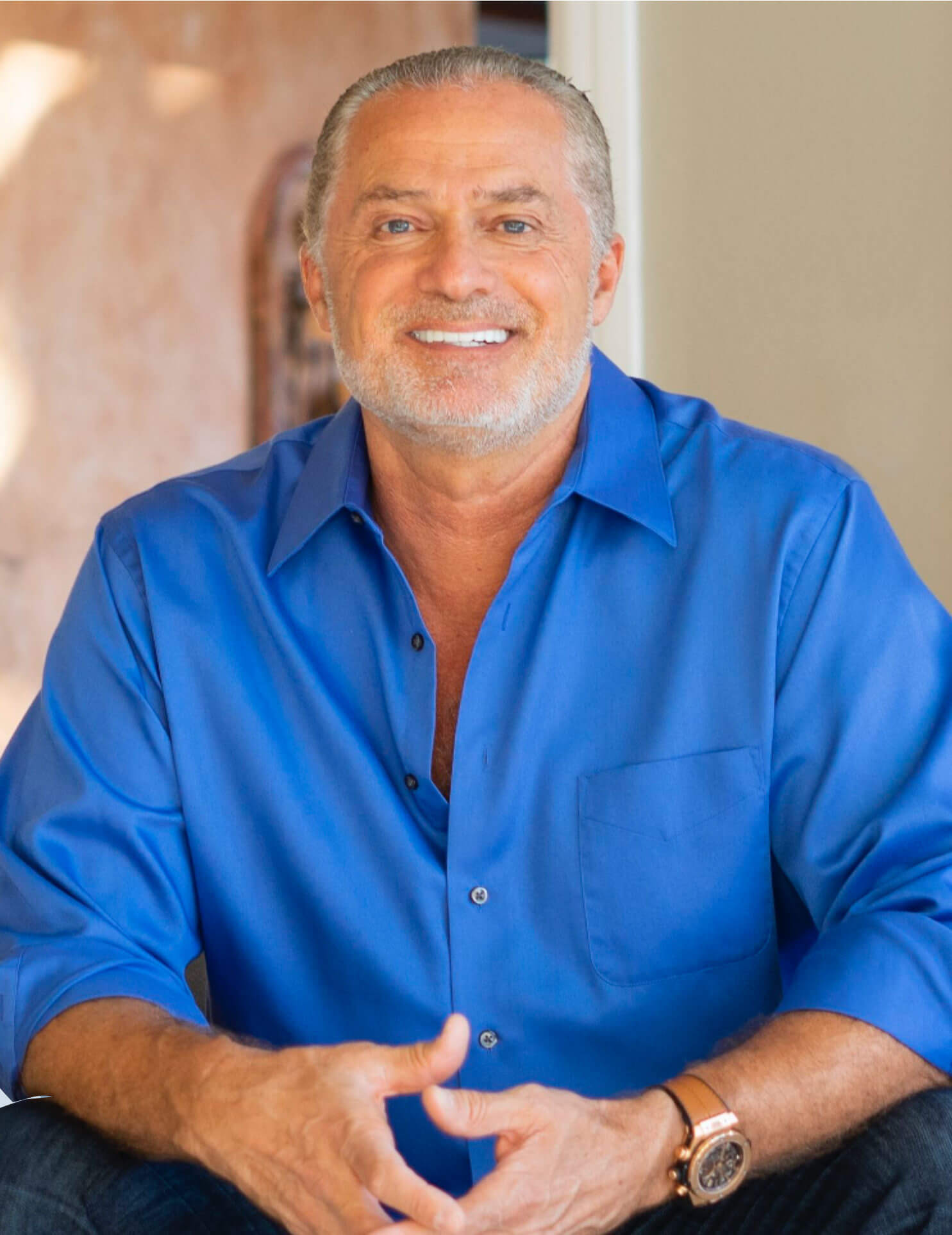
How Hardik Raval Uses Data-Driven Real Estate Investing to Scale Fast
In this episode, Hardik Raval breaks down how data-driven real estate investing strategies can help investors identify high-growth opportunities, reduce risk, and scale efficiently across multiple asset classes. With a background in engineering and analytics, Raval has built a diverse portfolio spanning multifamily, land development, salon suites, and assisted living by staying ahead of economic trends and leveraging strong market research.
Rather than chasing saturated primary markets, Raval focuses on secondary and tertiary locations where population growth, job expansion, and infrastructure investments create long-term upside. His approach centers on understanding macroeconomic indicators like housing shortages and employment hubs, then aligning acquisitions with future demand rather than current hype.
Identifying Opportunities Before the Market Moves
A key takeaway from Hardik Raval’s strategy is his ability to anticipate growth before it becomes obvious. By building relationships with brokers, city planners, and economic development teams, he gains early insights into where jobs and capital are flowing. This allows him to position investments near major developments, such as manufacturing plants or infrastructure projects, long before prices surge.
His process typically includes:
- Analyzing population growth and affordability trends
- Tracking large-scale employer expansions
- Building local relationships for off-market deal flow
- Investing near future economic drivers rather than current demand
This proactive approach gives him a significant edge, especially in land development, where timing and location are critical.
Scaling Through Partnerships and Systems
Despite managing multiple projects simultaneously, Raval emphasizes that scaling is not about doing everything alone. Strategic partnerships play a central role in his growth, allowing him to focus on acquisitions and market analysis while leveraging experienced operators for construction and execution.
He also highlights the importance of mentorship and community, noting that being surrounded by like-minded investors accelerates both learning and deal flow. This network effect has enabled him to expand beyond his original market and participate in larger, more complex deals.
A Practical Example of Value Creation
One of Raval’s recent multifamily acquisitions demonstrates how small, strategic improvements can significantly increase returns. After acquiring an 11-unit property below replacement cost, he optimized operations by improving property management, adjusting rents, and converting a unit into a short-term rental.
The result was a meaningful increase in net operating income without heavy renovations. This reinforces a critical principle: not all deals require major value-add strategies, sometimes operational efficiency alone can unlock hidden value.
Why Alternative Assets and AI Are Changing the Game
Raval also discusses how technology, particularly AI, is reshaping both the workforce and real estate investing. As traditional jobs face disruption, many professionals are turning to real estate as a more stable and scalable wealth-building vehicle.
At the same time, AI is becoming a powerful tool for investors, enabling faster deal analysis, market research, and even automated lead generation. Investors who embrace these tools early will have a significant competitive advantage in sourcing and underwriting deals.
Guest Bio
Hardik Raval is a real estate investor and entrepreneur based in North Carolina with a background in biomedical engineering and data analytics. He has built a diverse portfolio that includes multifamily properties, land development projects, salon suites, and assisted living investments. With a strong focus on data-driven decision-making and long-term community impact, Raval continues to scale his business across multiple markets while pursuing philanthropic initiatives such as funding education for underprivileged children.
If you want to hear the full conversation and detailed insights, watch the podcast video or read the complete transcript below.
Data-Driven Real Estate Investing Strategies
What are data-driven real estate investing strategies?
Data-driven real estate investing strategies involve using market data, analytics, and economic trends to guide investment decisions. Instead of relying on intuition alone, investors analyze factors like population growth, job creation, rental demand, and supply constraints to identify profitable opportunities. This approach helps reduce risk while improving long-term returns.
Why are data-driven real estate investing strategies important in 2025?
In 2025, real estate markets are becoming more complex due to interest rate fluctuations, economic shifts, and technology advancements like AI. Data-driven strategies allow investors to stay ahead of these changes by making informed decisions based on real-time insights. This is especially critical for investors looking to scale portfolios or enter competitive markets.
How do investors use data to find the best real estate markets?
Investors analyze macro and microeconomic indicators such as population trends, employment growth, infrastructure development, and housing supply. They also build relationships with local brokers and city planners to gain insights into future developments. By combining data with local knowledge, investors can identify emerging markets before they become saturated.
What types of data are most useful in real estate investing?
The most valuable data includes population growth rates, job market expansion, median income levels, rental trends, and new construction activity. Investors also look at cap rates, occupancy rates, and absorption rates to evaluate property performance. Together, these data points create a clear picture of a market’s potential.
Can beginners use data-driven real estate investing strategies?
Yes, beginners can absolutely use data-driven strategies by starting with basic metrics and gradually building their knowledge. Many online platforms and tools provide easy access to market data, making it more accessible than ever. Learning how to interpret this data is a key step toward making smarter investment decisions.
How does AI improve data-driven real estate investing?
AI enhances data-driven investing by quickly analyzing large datasets, identifying patterns, and forecasting trends. It can automate deal analysis, predict rental demand, and even help source off-market opportunities. This allows investors to make faster and more accurate decisions while saving time.
What are the benefits of data-driven real estate investing strategies?
These strategies help investors minimize risk, identify high-growth markets, and make more confident decisions. They also improve scalability by creating repeatable systems for analyzing deals. Over time, this leads to more consistent returns and better portfolio performance.
Are data-driven real estate investing strategies better than traditional methods?
Data-driven strategies complement traditional methods rather than replace them. While experience and intuition still matter, data provides objective insights that reduce guesswork. The most successful investors combine both approaches to maximize results.
How can investors start implementing data-driven real estate investing strategies?
Investors can start by researching key market indicators, using online data platforms, and tracking local economic trends. Building relationships with industry professionals also provides valuable insights that data alone cannot offer. Over time, combining these elements creates a powerful investment strategy.
What mistakes should investors avoid when using data-driven strategies?
One common mistake is relying solely on data without understanding the local market context. Another is using outdated or incomplete data, which can lead to poor decisions. Investors should also avoid analysis paralysis and focus on taking action once they have sufficient information.
Disclaimer: This summary was written with the help of AI and reviewed by Rod’s Team.
Mark Nagy: [00:00:00] Welcome back to multifamily Rock stars. So, as you guys know, this is where we deep dive into some of our student deals and, uh, really get into the nitty gritty with things. I’ve been looking forward to this one just because we’re gonna get into some. Weird asset classes today, and our guest actually has some really unique ways of looking at markets and deals, and I think we’re, uh, we’re all gonna learn some things today.
But, uh, rod, I’ll pass it over to you and let you do the intro for our guest
Rod Khleif: here. Okay. All right. Well, thank you. And thank you for, uh, doing the, the, the, the first intro. Um, so we’ve got Hardik Raval on today, and he’s a warrior and. Based in North Carolina and has done all sorts of things, uh, salon suites, which is something I was very interested in, where you rent a building and or buy a building and you, you carve it up and put, uh, people have their own individual hair salons, massage things, uh, nails, estheticians, you name it.
It’s a fantastic business model. He’s got 13 locations. Uh, he’s, uh, [00:01:00] developing, uh, tiny homes. Um, he, uh, his a 30 home tiny home development 214 unit residential development, 234 lot project. He’s involved in 173 bed assisted living portfolio that some warriors put together recently, and, uh, has completed the real estate management program at Harvard Business School.
Very cool. Uh, I’m gonna stop there ’cause I could keep going. Welcome brother. It’s good to see you.
Hardik Raval: Good to see you as well, rod. Uh,
Rod Khleif: glad to be
Hardik Raval: here.
Rod Khleif: Uh, very, very impressive, um, background. Like I said, I love the Salon Suites model, and I know you’re starting to get into, you’re doing some development with some warriors.
Very exciting stuff. But why don’t you tell us where you came from. Maybe give us a little background on you, uh, what, maybe what you did before real estate. You know, just briefly give us a little, uh, little better bio than I just did if you would.
Hardik Raval: Absolutely. Absolutely. Well, you know, um, I moved here to United States back in 2003, uh, with a thousand dollars [00:02:00] in my pocket.
Uh, did my higher education, um, master’s, uh, in biomedical engineering. Started as a healthcare statistician, uh, statistical consultant, and, uh, started venturing into entrepreneurship. So. My journey into real estate, uh, truly started from an entrepreneurial mindset, right? So I’ve always been fascinated by building things, um, not just businesses, but communities.
So earlier in my career, you know, I started, uh, launched a franchise called The Flying Locksmiths. And that’s what got me into the commercial real estate world because I started servicing commercial buildings, office buildings, retail, multi-family here in Raleigh Market. And, uh, that, you know, led me into developing relationships with the property managers, the brokers, the landlords.
So through that business, you know, I was constantly inside the buildings, right, that were owned by investors, developers. Which gave me a front proceed to how commercial realistic works and then allowed me to build the relationships. So that’s really where [00:03:00] my investment strategy into commercial real world opened up.
I exited that business back in 2021. But right before I exited that, in 2020, I started acquiring multifamily and Eastern Carolina is where I went first. Um, I had a portfolio of townhome single family homes that I was managing myself, but wanted to get in deeper into commercial real estate. And Greenville is where I landed Eastern Carolina Market and acquired my first 12 unit multifamily there.
And, uh, slowly started going into land development projects, started acquiring land. Um, and since then, you know, have acquired close to about 400 acres, uh, between Eastern and Western North Carolina. And, uh, continue developing, you know, different opportunities, um, across, across North Carolina and, uh, beyond North.
Rod Khleif: Nice. Nice. And, and that the most, the stuff you just mentioned, you’ve done since becoming a warrior and you joined, I think, was it June of 24? Is that right?
Hardik Raval: Yes. Yes. Okay. In June, 2024, I [00:04:00] decided to join the Warrior Program, um, with all the experience that I already had between technology and real estate and development.
The reason that drew me into the Warrior Program was one I was looking for, uh. Network of like-minded individuals who shared the same passion and who are scaling their business portfolio, uh, within the multifamily space. I had never syndicated before. All the projects that I had done before joining the Warrior programs were self-funded, and I wanted to learn how the syndication model worked.
Right? Yeah. Um, also, when I was listening to your podcast, prior to joining the Warrior Program, I had heard success stories of other warriors, you know, who share philanthropic goals, um, which were very much aligned with me and my family. My long-term philanthropic goal is to build schools in India and offer, you know, free education to underprivileged kids.
And, um, as I said, you know, when I came to this country, I only had a thousand dollars in my pocket. The only thing that drew me here and where I’m today is [00:05:00] education. So education is big for me.
Rod Khleif: Love it. Love it. And you know, we’ve got warriors that are building schools in India. Yes,
Hardik Raval: that is
Rod Khleif: correct. Yeah.
So I, I dunno if you knew that or not. Well, listen, you know, we just guys, see if you’re listening. We do get. Uh, really well seasoned, experienced real estate operators in the Warrior program because they, there’s always another level, there’s always another level, and in your case it was syndication. And of course, the network is, is, is what, is what brings it home, but.
So you’ve done a lot in the last couple years. You know my question, my first question to you is, how do you keep it all together? I mean, you’ve got the salon suites going on, you’ve got these development projects going on. Is it, is it partnerships? What do you do to to to maintain focus and make sure everything gets the attention that deserves.
Hardik Raval: Right, right. And again, I mean, going back to the Warrior program, so one was scale, but meeting with mentors. Meeting with coaches, right. And that’s where the true education begun for me, where I wanted to start [00:06:00] scaling businesses and be more disciplined, uh, in my business strategy in expanding the business across the country.
So the Look Salon Suites, I’m one of the co-founders, right? I mean we started this and then now after I joined the Warrior program, right? I mean we are scaling it across the country with 13 locations, but what really drives me is my ability to build things that have long-term impact, right? So real estate is extremely unique because it combines, you know, entrepreneurship, it combines finance design, it combines community development, right?
So when you are building housing or communities, you are creating places where people live their lives. So for me it’s not just about financial returns, it’s about, you know, creating projects that benefit both investors as well as the communities.
Rod Khleif: Nice.
Mark Nagy: So tell us about how you, um, identify those communities.
’cause reading through your bio, you have some really unique ways of looking at kind of macro and micro, um, economics in certain neighborhoods and areas. What are some of those things that the listeners can take [00:07:00] away that you do to find these up and coming areas or these good places to invest into?
’cause it’s a very unique process that you seem to have here.
Hardik Raval: Absolutely. So I always, you know, love macro trends, right? Like population growth, housing shortages, affordability challenges, and those trend. Create always opportunities for, for development. Right. So to give you an example, when I acquired Land Parcel in Western Carolina, um, I looked at growth where there is Toyota manufacturing battery plant, world’s largest battery plant.
They started with $1.8 billion and now they have $14 billion worth of investment. I own close to 400 acres in Western Carolina, 18 minutes away from that battery plant. So those are the opportunities I look for. I love to stay ahead of the growth curve, right? Uh, and again, it’s all about relationships with the brokers, relationship with the town planners, the city planners, the [00:08:00] economic development team, being out there in front of the people and constantly interacting with the key decision makers where you get a great insight of where the job growth is going, where the economic growth is going, and strategize that growth accordingly.
Rod Khleif: Yeah. Nice. Lemme ask you this, you know, we’ve got a pretty diverse listener base. What types of listeners do you think would relate to you the most? I, you’ve got the engineering background, you’re in real estate, you’re, you’re definitely an entrepreneur. Tell, tell me what sorts of listeners you think would relate to you the most.
Hardik Raval: So someone who is transitioning from a W2 job venturing into real estate, right?
Rod Khleif: Yeah.
Hardik Raval: Uh, folks who come from a tech background like myself, who. Make decision based on data analysis and data analytics, right? Uh, people who are looking to create impact beyond just
Rod Khleif: small. Lemme stop you for one second, lemme stop you.
I apologize ’cause Yep. You just said something that resonated with me. You said it. Jobs, [00:09:00] you know, I don’t know how you feel about this, but. AI is, is going to be eliminating a lot of jobs, in fact. Absolutely. I just told my daughter who works on my team, who is brilliant and she’s been doing SEO for me, that pretty much Claude and Open Claw can basically do her entire job.
So she and I are gonna be looking for a different business to do. Are are, you know, do you see that? And I’m just curious, are you still facts? So I don’t know if you agree that a lot of jobs are gonna be gone. Are we on the same page with that?
Hardik Raval: We are.
Rod Khleif: Absolutely. Yeah. And, and are you in, let me ask you this, are you connected to a lot of it people still, or, or not so much?
Are they, do they see it coming? Are they hiding their heads in the sand? What’s the sentiment that you’re seeing? Because by God, in my opinion, they need to start a side hustle or figure something out before the freaking shoe drops, you
Hardik Raval: know? Yep, yep, yep. Absolutely. I mean, people that I’m still connected with, uh.
Who are within the IT industry, they’ve all, almost [00:10:00] everybody has started venturing into alternative investment strategies. Right? Right. Uh, just, just like how I evolved from a full blown tech job, right. Getting into full blown entrepreneurship. A lot of people are seeing that ai. Is a perfect storm and you really, really need to start looking at alternative investments.
Right, right. So I agree with you a hundred percent.
Rod Khleif: Right. Well, you know, a lot of people in the IT space are very introverted. They’re very into themselves and and afraid of change. And that’s what concerns me is I think there could be a lot of pain for people that don’t see that writing on the wall. I kind of, I kind of stopped you in the middle of who you resonate with and I apologize.
Um, but, uh. Uh, so if you remember where you dropped off, I you just, when you said it, I had to throw that in there. ’cause I’ve been screaming that from the rooftops lately.
Hardik Raval: No, I, I, I completely relate to that and I, I think integrating AI within your business model is inevitable, right?
Rod Khleif: Yeah.
Hardik Raval: You, I, I, for me, you look at the positive side of it.
It makes your productivity go from one [00:11:00] 2000 x. Right.
Rod Khleif: It’s
crazy.
Rod Khleif: We’re already seeing it. I’m seeing, I’m seeing results in our, in our marketing, in our, in our view viewership on social media. And again, my, the guide handles, my social media says it’s gonna handle 95% of what he does once it’s up and running, which will be about a week from now.
Yeah. I mean, that’s how fast it’s happening. Yeah. So it’s crazy.
Hardik Raval: And, and I think the, the bootcamps, you know, the warrior only events that, you know, we come and attend. Right? Right. Uh, some of these topics that I have been witnessing over the last year or so, I’ve attended every Warrior event and
Rod Khleif: Right.
Hardik Raval: The topics that we are staying ahead in terms of AI being delivered.
Right. Right. That’s where the brainstorming and the knowledge sharing happens. And, and that’s the, that’s the kind of, you know, outlook that I was looking for getting into this program. Right.
Rod Khleif: Well, that, that’s, that’s the benefit is being around like-minded people. You know, rising tide, lip soul ships. I, I’m sure you know, our next, uh, warrior events, the end of May.
Uh, looking forward to that. Um, and, uh, uh, yeah. [00:12:00] Fantastic. Um, so the next question I want to ask you, um, I’m still on all Mark’s Thunder here, but the next question is, you know, what would you say is your superpower, because you’ve got so many plates spinning, I’m just curious, you know. What role you play? I mean, you’re an engineer, so you’re very analytical, but what role maybe besides that analysis that you play in the teams that you’ve either built and or joined?
Hardik Raval: Sure, sure. So again, my superpower is being able to adapt and seeing trends ahead of the curve, right? So. I love to play in secondary, tertiary markets, uh, where, you know, the job growth is gonna go. Right. I’m almost, I mean, that’s how I’ve built my whole real estate portfolio where I have been in places where people don’t want to go.
And, uh, and the, and, and I’m, and I’m saying it with, you know, uh, a grain of salt because. When you get into real estate, especially in the land development side [00:13:00] of the business, right? Right. Um, you are dependent on so many factors, uh, rezoning, entitlements, utility infrastructure constraints that a small rural town may have and without experience.
You can be on the completely wrong side and lose all your investment if you don’t have the right experience. Yeah. So where I play with the right partnerships that I have built over time, we have a, like one of my business partners, he’s been doing construction for 25 years. He’s based in Greenville, North Carolina.
Right. When we both joined forces, I actually had hired him as my contractor. Wow. And he said, Hardik, I don’t wanna work for you. I wanna be a business partner. And that’s where we joined forces and we started development deals together. But where I come in, my superpower is I do land acquisition, I do research.
I go out still today, knocking on doors, meeting with families. I have built a network of farmers all across North Carolina and have started building a hopper and a pipeline of, uh, deals that naturally [00:14:00] just flow to me now. Right. Nice. And with, with ai, I think this opportunity becomes even bigger because deploying AI agents that can go for.
Hunt deals for you. So having that unique technology background and understanding how real estate works, uh, can be very dangerous.
Rod Khleif: Yeah. Oh, it’s exciting. I dangerous, but I, I mean, it’s an exciting danger, let me tell you.
Hardik Raval: Absolutely. A hundred percent. Yep.
Rod Khleif: Yeah.
Mark Nagy: And those are all shifting ways. You can underwrite things as well.
Like, you know, as we’re talking about AI and jobs, like just my personal opinion, who knows how quick or long this is gonna take, but I probably wouldn’t be looking towards big tech hubs, right? Yeah. Places like Seattle, salt Lake City, the Bay Area. I’d be looking at places where there’s a lot of healthcare workers or blue collar, you know, places where there’s not gonna be a lot of layoffs over the next five, 10 years.
How, who knows how long this AI boom, you know, is gonna go on for, um, so Hardick, what, what is your favorite type of deal? You’ve talked about new construction, tiny homes, senior living, [00:15:00] regular multifamily. What’s, what’s been your favorite type of deal so far? Asset class.
Hardik Raval: So honestly, land has been my most favorite asset class, right?
I mean, I have really, really accelerated my, uh, land development project since I, uh, joined the Warrior program. And, uh, I was already, uh, involved in land development prior to joining, but this just accelerated, you know, my whole portfolio because, uh, the Brunswick County deal that I’m doing currently. 234, single family lots.
Um, this is gonna be, it’s the fastest growing county in North Carolina. And, uh, this project is gonna be amazing, but it requires a lot of discipline. It re requires, you know, almost every deal that is being underwritten right now. You gotta be very, very conservative, right? And you have to be very disciplined in your, in your deals with the inflation, with the interest rates where they are right now.
But I, I love Land Play. I, I, and, and now slowly after joining, you know, warrior Program, assisted Living is a new asset [00:16:00] class that has opened up for me as everybody knows, you know, everybody talks about silver Tsunamis coming. Right, right. Well, it’s
Rod Khleif: true.
Hardik Raval: Yeah. And, and, and that’s true. That’s true. Right? Yeah.
And, and I think this is my first project in central Florida. Um,
Rod Khleif: yeah. So that you, that you did with Warriors. Yeah, I’m very familiar with that project. Uh, ’cause we were looking at it as well. Monte and, and I know you’ve got a, a developer warrior involved in your, in the development you just described as well, one that does, and that’s the, that’s the thing guys.
We’ve got a lot of different asset classes going on in the warrior. Lots of development, lots of building, lots of senior housing, student housing, self storage, industrial flex space. And of course, you know, I, I’m fairly certain we’re at about 300,000 multifamily units owned by my warriors, which just blows my mind.
Um, by the way, if you’re interested in applying to our program, text the word Crush to 7, 2, 3, 4, 5. That’s how you apply to the Warrior program. Again, that’s crush to 7, 2, 3, 4, 5, and we look you over. You look us over, and if it’s a fit, you’re off to the fricking races. But, uh, [00:17:00] and, and would you, would you say in your view the, one of the most Ravaluable pieces of the program is really just the network, the connections.
Hardik Raval: Look that is, that is, that is definitely given, right? Right. I mean, it’s a group of trusted individuals. Uh, the kind of mentorship that I have, have gotten by just of one phone call away, right? You call your coach and you call the network of people that you can trust. I, I mean, I’ll tell you my personal story.
All my real estate investments has been in North Carolina before joining the Warrior Program. Right? Um, and the reason I was not able to expand into other markets was because to find that trusted group of people. Is very, very difficult. And, and when you are talking about real estate, this is a long haul.
And this network gave me that opportunity to start doing a JV deal, to start Coing on central Florida deal. Right. And this was my first deal outside of North Carolina. So it’s, it’s the network, you know, it’s the, it’s the mentorship and uh, everything that goes along with it and lifelong friendship and, uh.
A lot [00:18:00] of, I think the positivity that revolves around the group, when you hear other success stories, it just constantly keeps uplifting you, right?
Rod Khleif: Yeah. And, and, and as you mentioned, the whole philanthropic bent. You know, I, I remember being at one of my, uh, thousand person boot camps that I did in Orlando for three days, and we do a hall of fame award for the Warriors and mm-hmm.
Um, you know, uh, we did a slide for each one. I started to see a pattern. Every single one of them did something philanthropic. I mean, schools in India. Latin America, veterans, homelessness, veteran suicide, human trafficking. And I looked at the thousand participants and I pointed at this fricking monitor. I said, that’s what we call a clue.
Power moves to those who serve. Right? So, that’s right. Yeah. I, I mean, we’re, we’re, we’re hell bent on making the world a better place, not just our, you know, ourselves financially. So that’s. I, I, again, I’m, I, I can stop blabbering here, but uh, it’s something I’m very proud of.
Hardik Raval: Absolutely.
Mark Nagy: Let’s talk about this deal, Hardik, um, ’cause obviously this is a multifamily [00:19:00] podcast.
So tell us about this 11 unit, the first multifamily that you did since coming on board with us. You know, how you found it, why you thought it was a good deal. What was the process? Did you have any partners? What are you doing to increase the rents? Just give us the rundown.
Hardik Raval: Sure, sure, sure. So this first deal, uh, after joining the Warrior Program, I found it through a network of, uh, broker.
As I said, I have built a relationship with broker network and uh, a lot of times, uh, these deals flow off market, right? So. I was presented with this opportunity and uh, it’s Eastern Carolina. Very stable, uh, stable town in terms of job growth, right. Um, rent. There’s not a whole lot of new construction that’s going on in that town, and it was right next to Greenville where I’m, I was already doing active development deals.
So I knew the town really well, so my draw going to that town was one. I mean, yes, it’s stable. There isn’t a whole lot of new construction, so, which means the, [00:20:00] the rental demand is gonna continue to stay up. Right? Uh, it was stabilized, the asset, it was completely guarded in 2016. They had renovated the entire facility from the inside.
It’s in a historical downtown setting, two blocks away from river, which was a big draw for me personally, because a lot of people visit, uh. For several type of events in that town. Right. So all 11 units were long-term tenants. And, uh, after I, you know, when I, when I bought it, I bought it at a 8% cap rate.
Right. I had a, I had a pretty decent spread between what I borrowed from the bank. I bought the property on my own. Um, uh, it wasn’t a JV or a partnership. I financed it through a local community, through a credit union, actually. Right. And, uh, since, since I acquired this property, I’ve already, uh, last October.
I got my rates dropped to 5.75 from 6.25, so I got an additional 50 basis point spread, uh, from what I had already purchased. I converted [00:21:00] one of the units out of that 11 to a short term rental, and the Airbnb is doing just phenomenal over there. I mean, my whole NOI has gone up. So for every a hundred dollars a month times 11, I mean, you are adding $13,000 a year.
And increasing your net operating income. So I’m looking at a pretty, pretty decent exit at some point in the future. Why
Rod Khleif: would you ever sell it? If
it’s
Hardik Raval: doing well,
Rod Khleif: why would you ever
Hardik Raval: sell? I, I would not, honestly speaking, I, I’m, I, I’m always looking for long-term hold. I,
Rod Khleif: I, I regret every property I’ve ever sold, unless it’s in a Shreveport or a Memphis or somewhere.
That’s been a shit show it
Mark Nagy: stabbing and
Rod Khleif: killings. Oh, good God. Yeah.
Mark Nagy: Go ahead.
Rod Khleif: Sorry. Sorry.
Mark Nagy: Yeah. Well, no, hark said one thing that. Me and my partners have been talking about that I wanted to touch on right now is timing. You mentioned that your interest rate has been dropping. That is such The great thing about getting into the market right now is we’re already on the recovery.
Even on deals that I’m seeing that we bought a year ago, two years [00:22:00] ago. Everything is just, we bought it at the worst time. It’s getting easier and easier and easier, and it’s gonna continue to do that over the next couple of years, a hundred percent. Such, such a, something just to think about. ’cause everybody always comes up with excuses of, oh well, is now a bad time?
Are we at the bottom? Et cetera. Right. We already hit that. And going back the other way, now I do wanna ask you your opinion, ’cause you mentioned like some simple things on this deal, right? Just better property management, better connection to the tenants, doing some small little repairs. What, why do you think this was an opportunity to buy this deal?
Like what, why do you think the seller was selling this and they just didn’t do these things themselves?
Hardik Raval: So, see for me, this was buying below replacement cost for what I purchased. I purchased it for $1.2 million. Right? The sellers, it was actually a family. Um, and apparently the broker co-owned this property.
So, and I knew that broker, um, you know, for last three, four years. And they had an issue where, [00:23:00] you know, one of the family members was getting old and it was, uh, about two and a half, three hours away from where they lived. So they could not do it on their own, and that’s the reason why they wanted to sell.
Right? So it just worked out really well for me because I immediately engaged a professional property management company who are local in the town, have been doing this for a long time, and, um. Essentially, you know, this was not a Ravalue add strategy, but it was more of, you know, buying a property below replacement cost and slowly optimizing the rent, improving the tenant communication, right?
Engaging the right property management company, which is about a one block away from where this property is located.
Rod Khleif: Oh, that’s nice. That’s nice. Why you don’t get that very often. That’s awesome.
Mark Nagy: So, Hardick, if let’s say a new, a new student, someone who joined the Warrior Program were to come to you and say, Hey Hardick, I wanna invest in this area where you have relationships and the property managers and all these sorts of things, can you help me?
What would you, what would you say to that person?
Hardik Raval: Absolutely. I [00:24:00] mean, I would love to, you know, I mean, I was, when I joined. I was helped by several other people within the Warrior Group, and that’s what Warriors do, right? We give back and we support one another. Any new student that I can assist with, um, to join on a deal, whether it’s co-joined alongside me or any other warriors for that matter, I’ll give them my honest opinion in terms of, because look, I mean, everybody makes mistakes early on in their career, so if someone can learn from.
Someone like myself who has been doing this for a long time, um, at least they could avoid making those mistakes, right?
Rod Khleif: What a great answer, brother. What a great answer. By the way, again, if you wanna apply, which I recommend you do, if we’re in, I, we’re in one of the most exciting times in freaking history to buy real estate, okay?
Because what, what’s happened with these interest rates? F Text Crush right now to 7 2 3 4 5, and get on a call with my massive action team. I promise you’ll be glad you did. You’ll leave that call better than you got on it, sir. Hardick, if [00:25:00] anyone, if listeners wanted to chat with you, how can they reach you, buddy?
Are you okay with that? Uh,
Hardik Raval: they, yeah, absolutely. They can connect me via LinkedIn. You know, they can reach me via email or they can gimme a call. Absolutely.
Rod Khleif: Okay. Well, and what’s your email? LinkedIn. LinkedIn is Hardick hyphen Raval, R-A-V-A-L. Um, and uh, and your email is what?
Hardik Raval: It’s Ahan, A-A-H-A-N, dream@gmail.com.
Ahan dream@gmail.com.
Rod Khleif: Wonderful. Well, thank you for coming on the show, brother. Very impressed what you’ve got going so far, as I told you before we started recording. Very impressive. And I’ll see you, we’ll see you, uh, here at the end of the May.
Hardik Raval: Yeah, absolutely. Looking forward to it. Thanks for having me.
Rod Khleif: All right. Take care. See guys. You too. Thank you. Thanks.