Main Street Investing and Cash Flow Strategy with Russel Gray
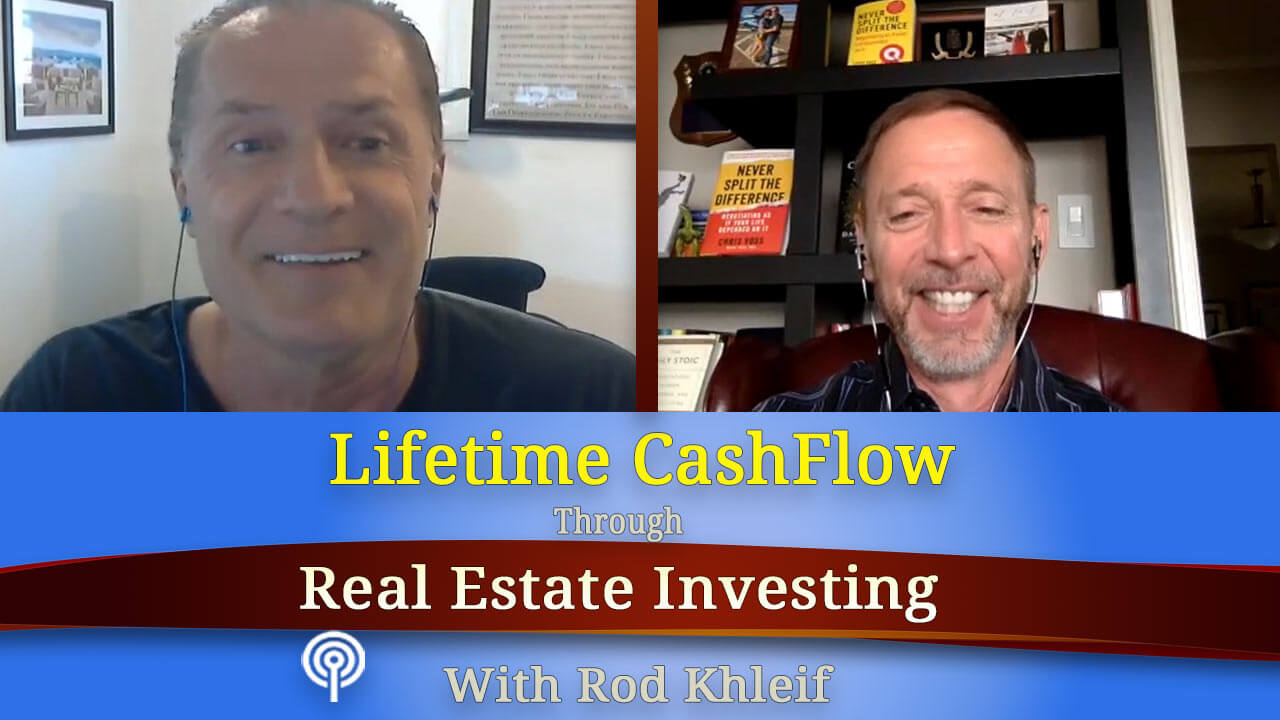
In this episode of Lifetime Cash Flow Through Real Estate Investing, Russel Gray shares a deep and timely discussion about Main Street investing, real estate cash flow, financial resilience, and the changing economic landscape facing investors in 2025. Drawing on decades of experience in real estate, entrepreneurship, investor education, and financial markets, Russel explains why wealthy professionals, business owners, and real estate investors must rethink traditional investing strategies and focus on cash flow, productivity, and real assets.
Why Main Street Investing Matters More Than Ever
Russel Gray believes the future belongs to Main Street investors who focus on owning productive assets instead of relying on Wall Street speculation. Throughout the conversation, he explains how many investors became dependent on rising asset prices rather than sustainable income producing investments. According to Russel, this mindset created dangerous exposure during both the 2008 financial crisis and the current multifamily real estate correction.
He emphasizes that Main Street investing is about owning businesses and real estate assets that provide reliable cash flow while serving basic human needs. Multifamily housing, essential businesses, and productive commercial assets remain attractive because they generate ongoing income regardless of market volatility. Russel repeatedly stresses that real wealth is created through resilient cash flow, not temporary equity spikes driven by speculation or artificially inflated markets.
The Difference Between Real Equity and Fake Equity
One of the most valuable lessons discussed in the episode is Russel Gray’s distinction between “real equity” and “fake equity.” He explains how many investors mistake rising property values for true wealth, even when those gains are disconnected from actual income production.
Using simple examples from residential and multifamily real estate, Russel demonstrates how easy money, low interest rates, and speculative demand can create the illusion of wealth. However, when cash flow does not support valuations, investors become vulnerable during market corrections. He explains that true equity is created by stable cash flow and operational performance, especially in multifamily real estate investing.
Several key themes emerge from this discussion:
- Cash flow is the foundation of long term wealth
- Multifamily investing works best when properties are operated like businesses
- Investors must understand debt, interest rates, and capital markets
- Real assets tied to human necessity outperform speculative assets over time
Russel also explains why many multifamily syndicators are currently struggling. Rising interest rates exposed deals that relied too heavily on appreciation instead of sustainable income. Investors who failed to lock in conservative financing structures or maintain operational discipline are now facing significant losses.
Lessons From the 2008 Financial Crisis
Both Russel Gray and Rod Khleif openly discuss the painful lessons they learned during the 2008 collapse. Russel explains that before the crash, he underestimated the impact Wall Street and the bond markets could have on Main Street real estate investors. He believed his portfolio was insulated from broader financial instability, only to discover how interconnected the financial system truly was.
The episode provides a detailed explanation of how mortgage backed securities, excessive leverage, and Federal Reserve policy contributed to the housing crash. Russel also connects those same concepts to today’s market conditions, warning investors to remain cautious about overleveraged deals and inflated valuations.
At the same time, he points out that difficult market cycles create extraordinary opportunities for disciplined investors who focus on fundamentals. Investors with strong cash flowing assets and conservative debt structures are often able to survive downturns and acquire distressed opportunities at favorable prices.
AI, Productivity, and the Future of Entrepreneurship
Another major topic in the conversation is artificial intelligence and its impact on Main Street investing and entrepreneurship. Russel Gray believes AI will dramatically reshape business ownership, productivity, and investing over the next decade.
He argues that AI presents two very different futures depending on how people respond. Employees who rely on repetitive task based jobs may face growing disruption, while entrepreneurs who learn to leverage AI tools could experience unprecedented productivity gains. Russel encourages younger generations to focus on entrepreneurship, operational skills, sales, and business ownership rather than depending solely on traditional career paths.
The discussion highlights several important opportunities emerging from AI:
- Buying and modernizing small businesses owned by retiring baby boomers
- Using AI to improve operational efficiency and marketing
- Increasing productivity in real estate operations and acquisitions
- Building scalable Main Street businesses with lower overhead
Russel believes the next generation of entrepreneurs will combine technology, AI, and practical business ownership to create wealth far more efficiently than previous generations.
Russel Gray’s Perspective on Mentorship and Investor Education
A recurring theme throughout the podcast is the importance of mentorship. Russel shares how his own entrepreneurial background, sales training, and investor education shaped his success over the years. He explains that information alone is no longer enough in today’s environment. Investors need guidance, community, and direct mentorship from experienced operators who have survived multiple market cycles.
He also discusses the evolution of investor education through the Real Estate Guys platform and his newer initiatives focused on entrepreneurship and financial literacy. Russel strongly believes that real learning happens through relationships, problem solving, and implementation rather than simply consuming online content.
About Russel Gray
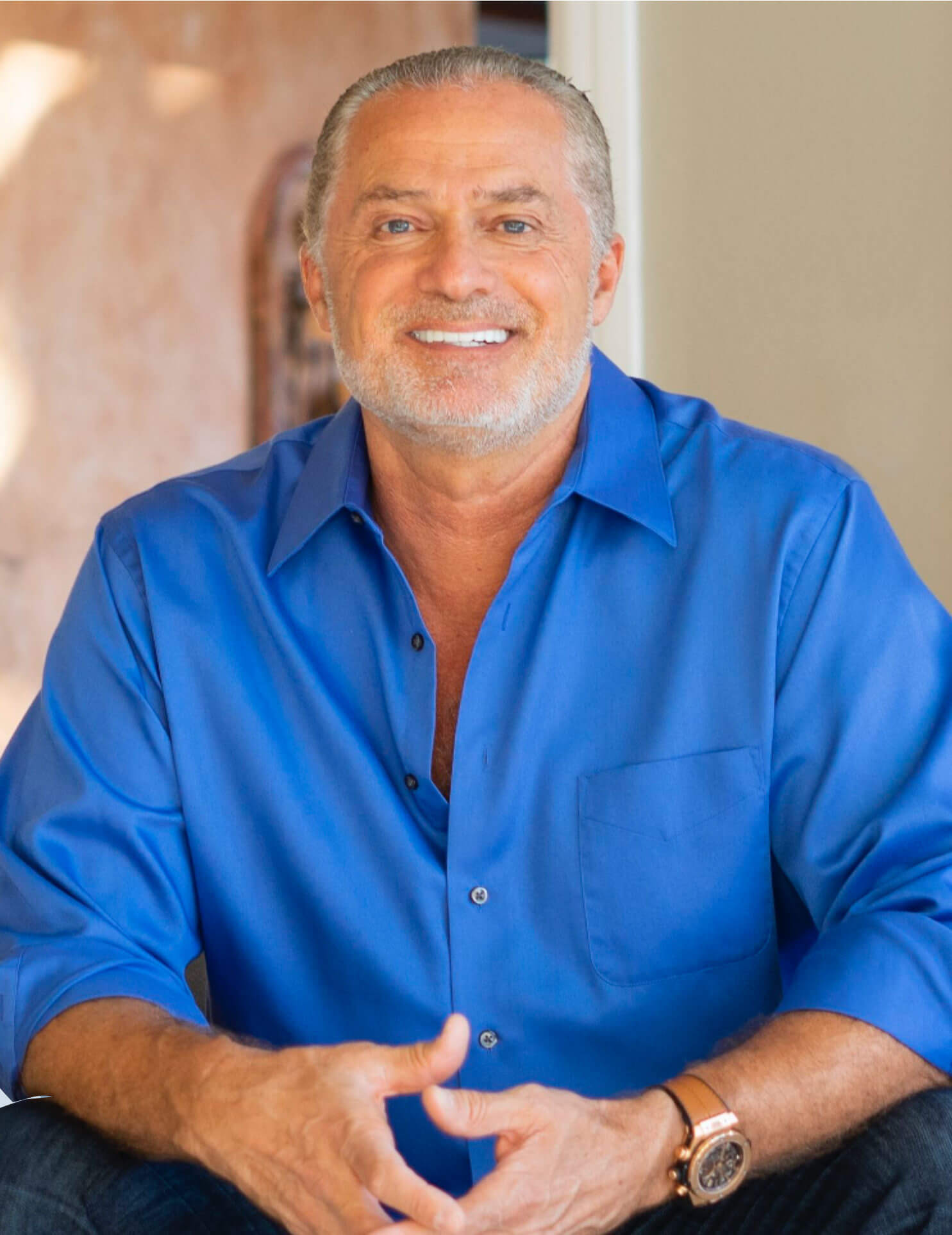
Russel Gray is a longtime real estate investor, entrepreneur, educator, and former co-host of the highly influential Real Estate Guys Radio Show. Over the last two decades, he has helped educate investors on real estate syndication, cash flow investing, entrepreneurship, and financial markets. Russel is also involved with Collective Inner Circle alongside several prominent real estate and economic thought leaders.
His work today focuses heavily on Main Street investing, entrepreneurship, mentorship, financial education, and helping investors adapt to rapidly changing economic conditions.
If you want to hear the full conversation and detailed insights, watch the podcast video or read the complete transcript below.
Main Street Investing FAQ
What Is Main Street Investing?
Main Street investing is an investment philosophy focused on owning real assets, businesses, and income producing investments that generate consistent cash flow and long term wealth. Unlike speculative Wall Street investing, Main Street investing emphasizes tangible assets such as multifamily real estate, small businesses, commercial properties, and essential service companies that provide real economic value.
Why Is Main Street Investing Important in 2025?
Main Street investing has become increasingly important in 2025 because investors are seeking stability, cash flow, and protection against inflation and market volatility. Many wealthy professionals and business owners are shifting away from speculative investments and focusing on real assets that can produce reliable income during uncertain economic conditions.
How Does Main Street Investing Differ From Wall Street Investing?
Main Street investing focuses on owning productive assets that generate income and serve essential human needs, while Wall Street investing often centers around stocks, paper assets, and speculative growth. Main Street investors typically prioritize cash flow, operational control, and long term stability over short term price appreciation.
Why Do Real Estate Investors Prefer Main Street Investing?
Many real estate investors prefer Main Street investing because it allows them to build wealth through rental income, appreciation, tax advantages, and leverage. Multifamily real estate investing, in particular, provides recurring monthly cash flow while also offering long term asset growth and inflation protection.
What Types of Assets Are Common in Main Street Investing?
Common Main Street investing assets include multifamily apartment communities, mobile home parks, self storage facilities, industrial real estate, small businesses, commercial properties, and essential service companies. Investors often target businesses and properties that perform well regardless of broader economic cycles.
How Does Cash Flow Impact Main Street Investing?
Cash flow is one of the most important components of Main Street investing because it provides ongoing income and financial resilience. Investors who focus on cash flowing assets are often better positioned to survive economic downturns, rising interest rates, and market corrections.
Is Multifamily Real Estate a Good Main Street Investment?
Multifamily real estate is widely considered one of the strongest Main Street investing opportunities because housing remains a basic human necessity. Apartment communities can generate recurring rental income, provide tax benefits, and create long term wealth through operational improvements and market appreciation.
Why Are Investors Moving Away From Speculative Investments?
Many investors are moving away from speculative investments because rising interest rates, inflation, and economic uncertainty have exposed the risks of relying solely on appreciation. Main Street investing offers a more stable approach focused on income generation, asset ownership, and operational performance.
How Can AI Impact Main Street Investing?
Artificial intelligence is transforming Main Street investing by improving operational efficiency, marketing, underwriting, customer service, and business productivity. Investors and entrepreneurs who leverage AI tools can often reduce expenses, streamline operations, and scale their businesses more effectively.
Can Main Street Investing Help Protect Against Inflation?
Main Street investing can help protect against inflation because many real assets naturally increase in value over time. Multifamily real estate, small businesses, and income producing properties often have the ability to raise rents, increase pricing, and maintain cash flow during inflationary environments.
What Skills Are Important for Main Street Investors?
Successful Main Street investors typically develop skills in sales, negotiation, leadership, underwriting, business operations, networking, and capital raising. Understanding cash flow analysis and market fundamentals is also critical for long term success.
Why Is Mentorship Important in Main Street Investing?
Mentorship is important in Main Street investing because experienced investors can help shorten the learning curve and prevent costly mistakes. Many successful real estate investors accelerate their growth by learning directly from operators who have already navigated market cycles and economic downturns.
How Can Beginners Start With Main Street Investing?
Beginners can start with Main Street investing by learning about cash flow, studying real estate markets, networking with experienced investors, and building financial literacy. Many investors begin with smaller rental properties, passive syndication investments, or partnerships before scaling into larger commercial real estate opportunities.
What Is the Long Term Goal of Main Street Investing?
The long term goal of Main Street investing is to create sustainable wealth, financial independence, and resilient income streams through ownership of productive assets. Investors who focus on cash flow and operational excellence often build wealth that can endure across multiple economic cycles.
00:00:00:01 – 00:00:23:03
Rod Khleif
Welcome back to life time cash flow through real estate investing. I’m Rod Khleif and I’m thrilled you’re here. And I’ve got a real blast from the past for me here today. So I was interviewed on the Real Estate Guys podcast, which has been around forever, a lifetime ago, and Russel Gray was one of the interviewees. And, and I knew we’d met.
00:00:23:03 – 00:00:30:10
Rod Khleif
I just couldn’t remember where if he’d been on my show or vice versa. But it’s just a real treat to have him here today. Welcome back. Welcome to the show, rusty.
00:00:30:10 – 00:00:42:02
Russel Gray
Yeah. No. It’s good. It’s great to be here. And congratulations. And everything you’ve done. It’s. You’re part of the old guard like we were, right. There’s no question. Wave of thought leaders had pulled Main Street into real estate investing.
00:00:42:07 – 00:01:06:10
Rod Khleif
No question. You know, it’s it’s interesting. I was telling Russel that I came to his event and I’m sorry. Your partner’s name? Robert Helms. Robert helms. Yeah, I came to Robert and Russel’s, event. Oh, my God, it had to be had to be ten, 11 years ago. Robert Kiyosaki was there and it was about syndication and, and got a picture with Robert and, that was funny.
00:01:06:10 – 00:01:31:09
Rod Khleif
And, and, it was in Phoenix. And we just know pretty much all the same people, you know, people that have that have, you know, been thought leaders in the space. We, you know, we talked about one of them and, and, yeah. Just, this is going to be a lot of fun. But, you know, Robert, Russel rather Russel is, really bullish on Main Street versus Wall Street.
00:01:31:09 – 00:01:39:08
Rod Khleif
And so we’re going to talk about all that today. So anyway, why don’t why don’t you do a much better job of introducing yourself than I just did.
00:01:39:10 – 00:02:04:21
Russel Gray
Yeah. So, you know, I talked about kind of being one of the old guard, for me, I grew up, in Silicon Valley. Before it was Silicon Valley. My dad was a high tech entrepreneur there. So he was an immigrant from the Philippines. And, so I kind of grew up with the, entrepreneurial mindset. And yet I saw tech as being something that would be very difficult to kind of keep up with.
00:02:04:21 – 00:02:27:09
Russel Gray
And so I just wanted to chart my own path. And, I ended up moving to Southern California. My dad’s younger brother, taught me outside sales and I discovered that sales is the essential life skill. And anything you want to do in business, if you can sell, you can survive. And so that that turned out to be more valuable than any college education I could have gotten.
00:02:27:09 – 00:02:47:17
Russel Gray
I started my first business. I bought my first piece of property all before I was 19 years old, and, you know, I made a lot of mistakes. And I think, you know, I talk openly. In fact, I talk a lot more about my mistakes than anything I’ve ever done. Well, because I think all the best lessons are in the mistakes, and people don’t like to talk about them.
00:02:47:18 – 00:03:10:13
Russel Gray
And I feel like I paid full price for the lessons, so I. I’m always talking about what I learned in those, in those difficult times. And so I made some mistakes. But I left Southern California, came back to, to Silicon Valley and went into outside sales. And there I was very, very fortunate to end up in some of the best sales training ever.
00:03:10:13 – 00:03:16:03
Russel Gray
I got handed a set of tapes by a buddy of mine for a guy I’m sure you know and love, Tom Hopkins.
00:03:16:03 – 00:03:17:18
Rod Khleif
Oh my God, he’s been on the show twice.
00:03:17:18 – 00:03:22:23
Russel Gray
Yeah. So Tom, Tom and I become good friends and my my current wife is very good friend.
00:03:22:23 – 00:03:42:07
Rod Khleif
Well, please give him my regards. Yeah, he, you know, I just sorry to interrupt for a second, but Tom is such a beautiful soul. And and he started this, this, this thing with me because he sends a handwritten note. That’s one of his things after each interview. So he sent me a couple, and I mentioned it. And I’ve got a wall in the other building here with hundreds and hundreds of thank you cards from students and what I.
00:03:42:07 – 00:03:45:01
Rod Khleif
Anyway, I digress, but yeah, Tom’s a wonderful.
00:03:45:05 – 00:04:10:07
Russel Gray
Well, you know, the point is, is that there’s classic and timeless wisdom and Tom is is one of those guys. The stuff he taught me in the mid 80s is just as valuable today. It doesn’t change, you know, in the mid 2020s. Right. And so I would encourage any young person who’s out there who happens to stumble across this to just invest time in learning how to sell.
00:04:10:09 – 00:04:28:03
Russel Gray
It’s a subset. Selling is really the core skill of leadership and communication. If you want to run a business, if you want to shepherd investors through ups and downs, lead a team, you need to raise capital. Whatever you want to do if you know how to sell, if you really understand, how to win friends and Influence people.
00:04:28:03 – 00:04:57:12
Russel Gray
Dale Carnegie’s classic work. I need my sales training, how to win funds and influence. I love it because I love adapted the things that I learned. And then I got a chance to go through some corporate training that was very, very valuable. And it taught me how to do business to business, selling. And in today’s world, where I believe that so much of the old structure is falling apart, and I think in that transition that we’re in right now and have been going through for a while, people get lost.
00:04:57:12 – 00:05:28:01
Russel Gray
And I want to encourage people to to don’t get lost in that lag. There’s some lags going on as we transition from one system to another, one dominant demographic to another, whereas we’re going through these changes and you try to apply the old rules to the new thinking. You’re to the new new reality, you can get lost, but at the same time, don’t throw away some of this classic wisdom because some of the old guys have something to say.
00:05:28:01 – 00:05:36:14
Russel Gray
And I think the younger people, you know, I always appreciated the older guys when they would invest in me. And I try to do the same thing now, the same that I’m on the other side of the equation.
00:05:36:18 – 00:05:57:09
Rod Khleif
I yeah, you know, it’s funny. I’ve got I’ve got a couple of Tom Hopkins books downstairs in my library. You were perusing earlier and, you know, I call it influence as well. It’s not just sales. It’s your ability to influence and and, you know, you I want to circle back to a couple things. You said, you know, you talked about mistakes, and I call them seminars, and I got that from Tony Robbins, and I call them seminars.
00:05:57:09 – 00:06:18:11
Rod Khleif
You know, I, I lost $50 million in 2008 and nine and, you know, I have, I do boot camps, I do virtual boot camps, and I have some of my students come on, my warriors and I always ask the question, talk about a seminar. Because, like you said, I think you learn more from from the, the when you get your butt kicked than you do from the successes.
00:06:18:11 – 00:06:25:22
Rod Khleif
And so, you know, they expect it. And we always go through that. But talk about what you’re doing now to know bring us current here.
00:06:26:01 – 00:06:51:14
Russel Gray
Well it’s interesting because it it it’s back to the future and it’s also changed because of what I went through. I lost not 50 million but many millions in 2008 as well. Right. And that changed me. Yeah. Because I realized my ignorance, my naivete, my my feeling of being safely insulated from the shenanigans on Wall Street. Yeah.
00:06:51:16 – 00:06:59:22
Russel Gray
That what happened there wouldn’t get on me. And I was naive enough to listen to people like Ben Bernanke, who goes, oh, this subprime thing is, wow.
00:07:00:00 – 00:07:01:04
Rod Khleif
I haven’t heard that name, and I’m not.
00:07:01:04 – 00:07:28:23
Russel Gray
Going to be a problem, you know? And because I didn’t understand the mechanics of the system, I couldn’t tell when the when the wave I was riding was going to break. I couldn’t tell when the momentum was going to shift. I had my whole portfolio, my whole business. Everything was geared for sunshine. So even though I remain optimistic, I definitely understand to be balanced and you got to play defense too.
00:07:29:00 – 00:07:57:18
Russel Gray
So, when I first got started in the financial space, after I had spent some time in the life insurance and securities industry, I realized that most of the training in that space was given by salespeople who had a very narrow agenda to teach you enough to buy their product. But the integration, putting it all together was very difficult, and that’s why people would turn their money over to financial advisors on Wall Street.
00:07:57:20 – 00:08:21:01
Russel Gray
But of course, having been in that space too, I understand those guys really didn’t know what they were talking about. They were still talking what the analysts were pushing down and they were selling whatever gave them their promotion, just like medicine and pharma. I mean, that’s just that’s maybe the dark side of capitalism and profit motives is sometimes people get myopic and they put their short term interests above the long term interests of the clients.
00:08:21:01 – 00:08:21:23
Rod Khleif
Very commodity.
00:08:21:23 – 00:08:46:23
Russel Gray
So what what I realized is that what people needed was context. And I it being in Silicon Valley and in the 90s and everything was.com and I was really watching the internet roll out and I could see how information, you know, the idea that we’re in the information age, I really felt like we were going to move into that age of wisdom where wisdom was going to be more valuable.
00:08:46:23 – 00:09:06:23
Russel Gray
Context was going to be the premium product and content. All the bits of information were going to become ubiquitous, and it’s only become more so even with AI is only regurgitating what thought leaders have produced. And I think that’s going to produce a whole new other opportunity. We can talk about that in a minute.
00:09:07:05 – 00:09:08:00
Rod Khleif
Let’s definitely talk.
00:09:08:01 – 00:09:41:05
Russel Gray
But but, but so I came up with this idea. I looked at church, I said, what is the most resilient, most proven, most powerful, most transformative method of human education and development at mass scale? And I looked around like, oh, it’s a church, and church has done better than colleges. It’s done better. It’s done better than any, any form of anything that has produced people who can think for themselves and can can live according to a philosophy or creed or principle.
00:09:41:09 – 00:10:07:19
Russel Gray
So I said, I want to create an investor mentoring program around that same model. And I believe that humans weren’t designed to sit and just consume information and regurgitate it. But we learn by doing. We learn by working with someone, having someone show us. And that the old adage that when the student is ready, the teacher appears. That’s how why it’s so important to be in a mentoring relationship.
00:10:07:19 – 00:10:20:20
Russel Gray
Because if you have to solve 100 hard problems to get to your next million dollar income, then the question is not if you can solve them. The question is how fast can you sell about.
00:10:20:20 – 00:10:21:06
Rod Khleif
Speed.
00:10:21:08 – 00:10:38:06
Russel Gray
Right? If you if it takes you. I do this all the time. If it takes you three months, 90 days to solve each hard problem, you’re going to take 24 years to get there. But if you can do it in a month, it’s only going to take you eight. If you can do it in a week, it’s only going to take you two.
00:10:38:08 – 00:10:59:19
Russel Gray
So who are you connected to? How fast can you get an answer from someone who’s been there, done that because the information is available. That’s why YouTube so popular. You can look things up, but that’s not the same as being mentored. So I think having those live interactive communities that you can be a part of small groups, if you will, mentoring clubs.
00:10:59:21 – 00:11:21:11
Russel Gray
And so I, I, I had met Robert Helms looking for faculty to build out this concept of investor mentoring clubs, and we did a version of it for ten years in Silicon Valley. And people like Kathy, Fit Key and Real World Network looked at what we were doing. Go, hey, we’re going to do that too. So I felt like that innovation gave birth to, you know, a bit of a movement.
00:11:21:12 – 00:11:40:19
Russel Gray
A little while later, the same thing happened in the syndication space. We talked about this earlier, but I saw the Jobs Act, and and I wrote a report, New Law Breaks Wall Street monopoly. And I believe there was can be huge opportunity in Main Street mom and pops competing with Wall Street because we were going to be able to advertise and I felt like we had a better product.
00:11:40:19 – 00:12:07:03
Russel Gray
Yeah. And yet the financial education that’s out there still very much geared towards buy low sell high speculative gambling mentality. And Kiyosaki came along with the idea of cash flow and how important cash flow was. And I think he began to break that paradigm. And obviously people resonated. They don’t get a job, start a business, don’t invest for capital gains or speculation, but invest for cash flow.
00:12:07:04 – 00:12:09:05
Rod Khleif
So the name of my podcast, Russel.
00:12:09:07 – 00:12:22:01
Russel Gray
Bell, is so, so, so it’s like, well, how do we teach people how to do that at scale? And so a couple years ago, I made the difficult decision to walk away from my partnership with Robert.
00:12:22:01 – 00:12:28:00
Rod Khleif
And just to give a little framework, guys, you and Robert had the Real Estate Guys podcast for how many years?
00:12:28:00 – 00:12:31:10
Russel Gray
So he started the show in 1997. Okay. Other guy.
00:12:31:10 – 00:12:31:21
Rod Khleif
Okay.
00:12:31:21 – 00:12:51:08
Russel Gray
And it was a radio show in the San Francisco Bay area, and that’s how I found him. And I went to one of his seminars, and in 2004, the original co-host resigned, and Robert and I had already been working together for a couple of years doing investor education. He says, hey, would you be willing to step in as my temporary co-host until I find a permanent replacement?
00:12:51:10 – 00:12:57:15
Russel Gray
I said, sure, yeah, but because we’d been teaching together for a couple of years, we had some real mojo and so.
00:12:57:15 – 00:12:58:15
Rod Khleif
Some synergies, I mean.
00:12:58:15 – 00:13:01:15
Russel Gray
I recall so I, we just kept doing it.
00:13:01:17 – 00:13:03:05
Rod Khleif
And, how long did you do it?
00:13:03:05 – 00:13:29:01
Russel Gray
All all told, I was co-host for 20 years. Robert and I were together for 24 years. Holy cow. Yeah. So it was it was like, it was hard. But now we’re still partners in Collective Inner Circle with George Gammon, Ken McElroy, Jason Hartman, and then Robert and I. So that, okay, that partnership began just as I was getting ready to leave the real estate guys and I and I, and I told the guys that go, hey, I, you know, if you want Robert and you don’t want me, that’s okay.
00:13:29:03 – 00:13:31:22
Russel Gray
But, you know, we’re not going to be a package anymore.
00:13:32:01 – 00:13:43:14
Rod Khleif
Yeah. No, I’m some of these names you’re thrown out there. Ken McElroy, wonderful human being. He’s been on the show a couple of times. And Kathy Fett, he, of course, is a great friend. You know, these are all old guards. We’re old guards.
00:13:43:14 – 00:14:05:20
Russel Gray
And so that’s that’s the whole that’s the whole point. Yeah. And so with the first thing I did when I left the real estate guys was, I had this experience the year before. Our friend, our mutual friend Robert Kiyosaki, invited me, and a bunch of his friends to go to, Arizona State University, where he was appearing with Dennis Prager at a pretty controversial event.
00:14:05:20 – 00:14:35:21
Russel Gray
Apparently it was just about health, wealth and happiness. And he brought in his cardiologist, Doctor Rada. And, he was there and Charlie Kirk was there. And so it was at ASU, and there was all these professors that were protesting, and they were very upset because Prager is a conservative Christian guy. Right. And so we went to support Robert, because he asked us to and I ended up in the VIP, back room, and I met Charlie and I said, hey, Charlie, I got an idea.
00:14:35:21 – 00:14:58:01
Russel Gray
Let me tell you, you’re really you’re young guy, you know, I’ve got this idea. And I explained to him the thesis for, what I wanted to do called the Raising Capitalists Project. It was to pair, experience entrepreneurs and investors with parents of kids when the parents don’t know how to start a business, and they think the only thing they can do is send their kid to college to give them a better life.
00:14:58:01 – 00:15:18:13
Russel Gray
It’s like, no, no, start a family business and let the kids mentor or apprentice with you in the business. And and you can be apprentice yourself. And he goes, I love it. I want to help you. Here’s my email. I have you on the show. And so it took me a little while. Then in January of 24, I, sat with, went to dinner with Mark, Victor Hanson and Crystal Hanson.
00:15:18:15 – 00:15:20:04
Rod Khleif
And they I’ve had Mark on the show Chicken.
00:15:20:04 – 00:15:24:18
Russel Gray
Soup of the soul for you young people have never heard of Mark, bestselling book author in history.
00:15:24:18 – 00:15:26:15
Rod Khleif
Best best selling book and,
00:15:26:17 – 00:15:27:22
Russel Gray
600 million book.
00:15:27:22 – 00:15:32:21
Rod Khleif
600 million. Yeah. He was on the podcast a while back. He’s a wonderful human being as well. Yeah.
00:15:32:21 – 00:15:52:00
Russel Gray
So, so he he and Craig, he goes, look, I will help you. I will support you. I’ll open doors for you. Nice. And so I thought about that and I thought, well, I got Charlie Kirk who really understands you. What a travesty. And and then you’ve got Mark Victor Hanson, who is just legend in the publishing business. They both think this is a banger idea.
00:15:52:00 – 00:16:06:06
Russel Gray
Both ends of the spectrum. So I’m like, okay, so, three months later I told Robert, you know, I’m, I’m I need to break up. I’m trying to find a smooth exit. There isn’t one. I’m going to rip the Band-Aid off. So it’s a little awkward, but we got through it.
00:16:06:07 – 00:16:06:22
Rod Khleif
Okay.
00:16:07:00 – 00:16:28:03
Russel Gray
And in July, I launched the foundation. Or the raising capitalist foundation I created as A501 C3 nonprofit. And I went to Freedom Fest, a conference put on by a friend of mine, Mark Scanlon. And it was July 13th, 2024. That and I’m getting ready to go on stage to speak. And I’m sitting there waiting to go on stage.
00:16:28:03 – 00:16:37:06
Russel Gray
A guy who’s got the stage in front of me is finishing up, and everybody’s phones are going off. Trump had just been shot in Pennsylvania.
00:16:37:06 – 00:16:38:02
Rod Khleif
Good lord.
00:16:38:04 – 00:17:01:12
Russel Gray
It’s always you remember that that day. Wow. That day. So I went up and I gave my talk and everybody of course was distracted. But I got good video. It’s up on the Raising capitalists.org website. And I explained the thesis of what I wanted to do. So that was kind of step one and the idea of take mentoring, but now take mentoring and not just make it about investing because I didn’t create the real estate guys brand.
00:17:01:12 – 00:17:05:19
Russel Gray
I kind of you know, inherited it or, you know, we.
00:17:05:21 – 00:17:08:14
Rod Khleif
I was a you were big a big piece of it.
00:17:08:14 – 00:17:24:17
Russel Gray
Well, no, I mean I became the business strategy. I mean, there’s a lot of things. I mean, my fingerprints were all over it for sure, but it was always Robert Show. It was always his thing. I wanted to do more than real estate and more than real estate investing. So when I saw syndication, I really pushed hard to move in that direction.
00:17:24:17 – 00:17:40:19
Russel Gray
I go, this is a chance for us to be Biggerpockets was coming up. I’m like, we’re not going to be bigger pockets, right? I’ve talked to Brandon. I’m not going to work hundred hour weeks. I mean, what he did to build that thing nearly killed him, right? And it was great. And it’s been been very, very good for real estate and real estate investing.
00:17:40:19 – 00:17:55:06
Russel Gray
But I wanted to go next level. I go, what’s missing? What’s missing is how do you raise millions of dollars and play this game at the next level? I go, we know how to do that. We can teach people how to do that. Nobody’s in that space yet. We can pioneer this thing. Right? And so we did. Yeah.
00:17:55:06 – 00:17:58:12
Rod Khleif
You did. I went to the event, for God’s sakes, and nobody was doing it.
00:17:58:12 – 00:18:04:12
Russel Gray
Yeah, nobody was doing it. Now Hunter Thompson’s into it. Oh, sure. You got Brad some rock. There’s a lot of guys you.
00:18:04:14 – 00:18:05:08
Rod Khleif
Oh, I oh, sure.
00:18:05:08 – 00:18:32:00
Russel Gray
A lot of a lot of. It’s great. It needs to happen. My goal when we started that thing was to pull hundreds of billions of dollars a year out of Wall Street and bring it back to Main Street, because I just think it’s absolutely ridiculous that Main Street gets up every day and does the real work, and then they pay their taxes and they live below their means and do the right thing, and then they take their savings and they send it to Wall Street, and Wall Street gambles with it.
00:18:32:06 – 00:18:54:22
Russel Gray
And when they win, they keep most of it. And when they lose, they put it to the public either directly because the investors take the loss or usually they get bailed out. And everybody who is an honest worker who even if you don’t invest in Wall Street, you get inflation. And if you don’t know how to invest to win from it, of course you know all about it.
00:18:55:03 – 00:18:57:02
Rod Khleif
You’re preaching to the choir here, my friend.
00:18:57:02 – 00:19:12:02
Russel Gray
Okay, but, but but there’s a lot of people who don’t understand it. And what’s bad now is. Well, the mind your own business crowd. I gave this talk at the New Orleans Investment Conference last year, and I go, look, you guys are the salt of the earth, right? The mind, your own business crowd, the people that get up every day.
00:19:12:02 – 00:19:36:13
Russel Gray
You take care of business, you pay your taxes. You pay the bills. You create jobs. You create great products. You provide the services we all depend on. God bless you. But here’s the problem. Well, you’re busy minding your own business like Nero fiddling while Rome burns. These people have taken your children’s minds and they’ve polluted them to believe that you cheated.
00:19:36:15 – 00:19:39:09
Russel Gray
There are millennials out there that are on a tear.
00:19:39:10 – 00:19:39:15
Rod Khleif
00:19:39:18 – 00:19:40:23
Russel Gray
To to call out the.
00:19:40:23 – 00:19:48:17
Rod Khleif
Boomers. You be careful. Careful. You’re you’re heading down a path that I’m very, very animated about. And I agree completely.
00:19:48:19 – 00:20:10:23
Russel Gray
We need to come together because because the millennials are right. They inherited a raw deal. The system is rigged. What they don’t understand is the boomers inherited a bad deal. Now, it may not seem like it because we wrote a 40 year bond bubble that created equity everywhere. Robert and I wrote a book, equity Happens, and it was based on this premise.
00:20:11:03 – 00:20:43:05
Russel Gray
Like just buy a piece of property, wait ten years, you’re going to double your equity, right? Right. That’s just the deal. But I think that game’s about to change, and I think it needs to. It means the old guard is going to have to learn to play the game a new way. But I think the millennials need to understand that our parents let Nixon take us off the gold standard, and their parents let FDR confiscate all the gold, and their parents let the Federal Reserve come into existence, which is the genesis of the whole problem.
00:20:43:06 – 00:21:16:08
Rod Khleif
Listen, I remember when I was nine years old and immigrate to the country three years prior to that. So this is 1969. Hamburgers were $0.10, gas was $0.24 a gallon. And, and and there were multiple there were, fractions of a penny on the, on the price of gas where I was like 24.9. You remember this? Yeah. And and you know what has happened to the dollar because of all these things you just mentioned is, is a travesty, candidly.
00:21:16:10 – 00:21:39:10
Rod Khleif
And, you know, I’ll tell you, it’s, you know, I invest in gold. Thank God, when it was $1,500. And it’s been an incredible thing. You know, I’ve got quite a bit of it in a vault downtown, you know, and but yeah, this inflation thing has been. And, you know, I had an economist sitting in that in that seat, I don’t know, about a year and a half ago.
00:21:39:12 – 00:22:05:23
Rod Khleif
And he, he said that 80% of the U.S. currency was created in the Biden administration, literally up to 2020, only 20% of the currency U.S. currency in circulation was around, and another 80% was created those four years. And we’re wondering why there’s inflation. I mean, you know, it’s it’s it’s inevitable. Now, you it indicated before we started recording that you think there’s going to be another round of that.
00:22:05:23 – 00:22:08:02
Rod Khleif
Do you think there’s either inflation is going to continue.
00:22:08:02 – 00:22:30:01
Russel Gray
Well you know I mean this is may be controversial. I’m kind of warming up for this mastermind we’re about to do. But but I don’t think that we are in a business as usual. Political or geopolitical environment. Oh, no, I think I think the system that we are, a part of is coming to an end. And it was going to come to an end no matter now.
00:22:30:01 – 00:22:31:16
Rod Khleif
What system specifically.
00:22:31:18 – 00:22:54:01
Russel Gray
The, the, the, central bank, the Federal Reserve, the fiat money system. So this was an experiment, right? We came the world came off the gold standard, effectively, officially in 1971 when Nixon broke Nixon’s standard. So there’s there’s a lot of history there. And if you’re new, I’m just going to encourage you study the history. I’m I’m working on a series to teach the history.
00:22:54:01 – 00:23:15:22
Russel Gray
Mike Maloney did a great series called The Hidden Secrets of Money, and that teaches it pretty well. But I think there’s pieces that are missing. And I love Mike. We’re good friends. Fact he’s a member of our mastermind. This is Kiyosaki, so hopefully I’m going to see him both this weekend. But I think that that, you know, I have the benefit of I raised, five millennials.
00:23:16:00 – 00:23:35:15
Russel Gray
So I know a little bit about the way they think. I know a little bit about what their life has been like. I know a little bit about the challenges that they’ve faced. Unfortunately, my kids are basically entrepreneurs, and so they, by and large, have done pretty well. And I think we’ll continue to do pretty well because of the way they think.
00:23:35:17 – 00:23:38:17
Russel Gray
They take personal responsibility. They don’t blame. Right.
00:23:38:19 – 00:24:05:16
Rod Khleif
And I’ll wait a minute. I want to stop you there. That is, that’s that’s a, rare thing for millennials right now. I mean, I can’t tell you how many. You know, I get a lot of hate, honestly, online. You know, no one should have owned 800 houses. And, you know, people that that there’s an entitled, you know, piece to this that, that, you know, you’re blessed that your children don’t, you know, didn’t grow up that way.
00:24:05:18 – 00:24:06:08
Rod Khleif
Well.
00:24:06:10 – 00:24:29:03
Russel Gray
Like I said, I was raised by an immigrant entrepreneur. Right. Fled. Japanese occupied, Philippines. Oh, wow. And so he knows what tyranny looks like firsthand. And so he has a real appreciation for America. Right. And the Constitution and the liberties that we basically take for granted in some case, we actually abuse. Right. And so, I kind of come by that a little bit, honestly.
00:24:29:03 – 00:24:44:23
Russel Gray
He also realized as an immigrant, nobody was going to hand him anything. He was going to have to figure it out. And so, he didn’t talk a lot to me, but I watch him, and he was a very, very hard worker, and he was a risk taker. He wasn’t afraid to bet on himself. And so, I got a chance to see that.
00:24:44:23 – 00:25:03:00
Russel Gray
And I think some of that got off on me. The other thing is he he left me to my own devices. And so early in my life, I resented him. I felt like he ignored me. He’d been selfish. But as I got older, I realized because I had to figure it out, I figured it out. But as I began to, we homeschooled our children.
00:25:03:00 – 00:25:29:19
Russel Gray
Oh, wow. And so as I went through that process and I began to study so I could teach, I realized that so much of what I had learned about history and the way the world worked was, I’m not going to say it was false, but it was lacking. There were so many things that were missing, and those missing pieces allowed you to draw, either bad conclusions or no conclusions whatsoever.
00:25:29:19 – 00:25:48:15
Russel Gray
And so you could regurgitate information and pass a test, but you didn’t really understand the way things worked. And so I found my ignorance again in 2008, I quadrupled down on it because that was very painful. But it wasn’t the first time I’d seen lost my dad lost everything in the 87 crash. Oh, no. Can I was in the securities industry at the time.
00:25:48:15 – 00:25:50:10
Russel Gray
And so I go, look, I don’t understand.
00:25:50:10 – 00:25:52:03
Rod Khleif
Is that the SNL one I’m for?
00:25:52:05 – 00:26:12:16
Russel Gray
No, no, I’m SNL came a couple years later, but that was Black Monday. Oh, God. That was the beginning of the Alan Greenspan what they called the Greenspan or the fed put. Got it. Ronald Reagan administration reaction to that was to form what they called the President’s Working Group, which is essentially the Plunge protection team. And they found out because of the way values work.
00:26:12:16 – 00:26:28:06
Russel Gray
And this is a whole thing, I could go off on why equity is fake. And, you know, I wrote equity happens and you can make a lot of money with equity. But you better turn it into something real. If you just went around, you know, posing with your balance sheet and go, hey, assets minus liabilities equals net worth.
00:26:28:06 – 00:26:41:15
Russel Gray
And you think or something like, I’m guessing when you lost $50 million, it wasn’t cash flow equity. Primarily it was equity. Yeah. Because equity is fickle. Equity is fake. And people who don’t understand what real equity is versus fake equity.
00:26:41:15 – 00:26:43:00
Rod Khleif
Well, would you describe it, please?
00:26:43:00 – 00:26:44:15
Russel Gray
Well, so fake equity is very.
00:26:44:15 – 00:26:56:06
Rod Khleif
Simple is what I had basically you know, I had it and my real estate was worth 50 million more than I owed on it. And so I thought I was golden. And so no, it’s this is very interesting conversation for me.
00:26:56:06 – 00:27:20:02
Russel Gray
So this is the essence of it. Right? Okay. You talk about the system changing. Right. So the system was changing because the system was all based on, on fake fake money, fake equity and real estate investors will get it. I give it to you in a real estate way so you can understand it. And I’ll explain to you how it, it it it, applies to most of Main Street out there with their four on one case.
00:27:20:04 – 00:27:50:08
Russel Gray
So in, in real estate, if you had $1 million economy, there’s only $1 million total purchasing power. That is it, right? That is all there is. And there are only ten houses. That’s all the product. That’s it. Ten houses. They are all 100% identical down to, you know, the fiber in the carpet. They’re identical. Right. If you were to value each one of those houses, you would take $1 million total available divided by ten total inventory, right?
00:27:50:11 – 00:28:10:05
Russel Gray
$100,000 each. But because there’s $1 million in the economy, the participants in the economy are doing what they do, and somebody ends up with a couple hundred thousand says, hey, I want to buy a house for 200,000. So he goes and buys one of the houses for 200,000, and the guy who sold it can rent it, you know, it’s got the 200,000.
00:28:10:06 – 00:28:38:09
Russel Gray
Okay. So you still got oh, you still got $1 million in the economy. One guy got $200,000 for his house. That transaction settled. So for that buyer and that seller and that buyer and seller alone, that house was worth 200,000. I got you. But there are nine other people now who all think their house is worth 200,000, and an appraiser will come give them that value.
00:28:38:11 – 00:28:46:07
Russel Gray
So now you think you are in a $2 million economy. But where did the money come from? It didn’t. Got it. It doesn’t exist.
00:28:46:08 – 00:28:48:17
Rod Khleif
Oh that’s fascinating. Yeah. Absolutely fascinating.
00:28:48:17 – 00:29:13:08
Russel Gray
So now you’ve got the S&P 500 hitting all time highs right. Driven by seven stocks. Everybody else is a loser. And people like oh well you can’t beat the indexes. Now you go back to a government that wants to control public perception. That creates a plunge protection team that can buy those seven stocks. Yeah. Now they can create fake prosperity.
00:29:13:08 – 00:29:15:13
Russel Gray
So you don’t cry when you have to pay, which.
00:29:15:13 – 00:29:16:06
Rod Khleif
Is what they did.
00:29:16:09 – 00:29:17:18
Russel Gray
Which is exactly what they did.
00:29:17:20 – 00:29:22:03
Rod Khleif
So so do you feel like there’s a reckoning on the horizon?
00:29:22:03 – 00:29:24:02
Russel Gray
100%. Yeah, 100%.
00:29:24:02 – 00:29:29:17
Rod Khleif
Yeah, I do too, actually, but I didn’t I never heard that explain that well before. That’s fascinating. Well, you.
00:29:29:17 – 00:29:31:18
Russel Gray
Know, when you want to teach kids, you got to just like.
00:29:31:18 – 00:29:32:03
Rod Khleif
Yeah.
00:29:32:06 – 00:29:44:18
Russel Gray
Dumb it down. Or if I can teach it to an old greater than than than, you know, that way in kids hockey taught me that I I’d go on Kiyosaki show and I’d go to be all smart, right. He would just rip me. Yeah.
00:29:44:18 – 00:29:45:18
Rod Khleif
No kidding bro.
00:29:45:19 – 00:29:51:20
Russel Gray
Come on, you’re killing me. Wow. But but he’d keep it simple. Keep it simple. Like, okay, I got to keep.
00:29:51:20 – 00:30:01:19
Rod Khleif
No, I totally get it. Wow. That’s that’s very, very interesting. So so you believe that we’re going to see some pain in the stock market in the in the future here.
00:30:01:21 – 00:30:25:00
Russel Gray
Yeah. Well so so Cusack you wrote this in prophecy credit where credit is due. He just looked at demographics. We’re probably going to talk demographics who were talking on it before we hit record. Right. And you know, demographically you’ve got boomers who control a lot of the wealth and they’re getting to required minimum distributions. They’re getting to the season of life where they need the money.
00:30:25:01 – 00:30:44:18
Russel Gray
Some of them are going to pass the money on, and the heirs are going to sell everything and spend the money and do what they want to do. So the idea is there’s going to be some pressure downward on the stock market. And so I think that the sooner you just start focusing on what’s real and essential.
00:30:44:21 – 00:30:46:03
Russel Gray
We talked about residential.
00:30:46:04 – 00:30:48:12
Rod Khleif
Define defined define define rule in a sense.
00:30:48:13 – 00:31:07:14
Russel Gray
Well if it serves a basic human need first of all if it’s tangible if it’s real okay. Right. Equity’s not real. It’s it’s an abstract. It’s a it’s this idea. Right. It’s only real if you make it real if you realize the gains. So unrealized gains aren’t really real. Really.
00:31:07:16 – 00:31:09:10
Rod Khleif
They’re not real. I learned that the hard way.
00:31:09:10 – 00:31:26:21
Russel Gray
They’re not real. Right. And so yeah, guys like you and me, when we go through that, it’s like, okay, obviously the way I thought was wrong because, you know, I’m partners with Ken McElroy in the collective inner circle. And I should get just get a chance to spend a lot of time with Kenny. And Kenny was always a cash flow guy.
00:31:27:00 – 00:31:52:19
Russel Gray
And so I lost everything in 2008. And I go, not my fault. Nobody saw it coming. Nobody could have seen it coming. I’m a victim. And that lasted for about 90 days. And then I looked at Ken, and Ken was crushing it. Ken was making all this money and I’m like, okay, wait a minute. Two guys basically the same age in the same market, in the same economic situation.
00:31:52:19 – 00:32:07:00
Russel Gray
One guy gets his butt handed to him and another guy’s making a fortune. So obviously it’s not the externals if they aren’t the things that I can’t control, right? You can’t control how you were when you were born. I was in control. What’s going on? The market?
00:32:07:00 – 00:32:09:23
Rod Khleif
What was his secret? Was it cash flow? That’s it. Okay.
00:32:10:01 – 00:32:35:08
Russel Gray
Thank you. He. He just invested for cash flow. So I said, okay, I’m going to study this like, it’s it’s like. And then I began to realize that equity there’s two types of equity homeowners get equity from comps. And comps come from a combination of interest rates and salaries, where people can way overpay for a house based on its economic utility as a place to live.
00:32:35:08 – 00:32:53:03
Russel Gray
Right? Because today you can’t buy a house and rent it for anything that makes sense, right? That tells you that it’s been way overbid. It’s actual utility, but people buy it. Why? Because they think it’s going to keep doing that. That’s a dangerous game to play now in commercial. And you’re you know I’m a multifamily guy.
00:32:53:03 – 00:32:53:21
Rod Khleif
Oh we’re seeing them right.
00:32:53:21 – 00:33:20:15
Russel Gray
Do you totally understand that the numbers the cash flow is actually where the equity comes from. So it’s impacted by the interest rates. Right. And so people who understand apartments for example, should be able to understand the bond market. But in my experience, they don’t know. And so for those of you who are out there who understand, you’ve been listening to rod and you’re like, okay, I get real estate.
00:33:20:15 – 00:33:43:18
Russel Gray
Let me just explain to you that real estate in the bond market, right in, in in real estate with with the multifamily property, if the rent stays the same and the cap rate goes up, what happens to the equity. Yeah. Goes down. Yeah. Right. And if the rent stays the same and the cap rate goes down, what happens to the equity it goes up.
00:33:43:19 – 00:34:09:01
Russel Gray
Bonds are exactly the same way. Bonds are exactly the same way. So if you have a bond that was issued at a coupon, it’s rate, it’s yield and interest rates go down, the value of that bond goes up. And so people who trade bonds for equity will buy bonds in a declining interest rate environment, thinking that’s going to continue to happen.
00:34:09:01 – 00:34:26:12
Russel Gray
And they can flip the bond for a profit. That’s why, you know, back in the day when bonds were half a bit, you know, half a point 50 basis points of who in the world would buy a bond at 50 basis points. Somebody who thinks it’s going to go to 25 basis points, right. That’s who’s going to buy that bond because they’re going to flip it.
00:34:26:14 – 00:34:45:17
Russel Gray
Right. So when you understand the paper side of the business like, oh okay I get it now. But when it got down to the zero bound now you’re like, oh hey, the rates can’t go down any further. So now this is a very dangerous game. How do you continue to make money. Well they’re going to they have to keep the rates down.
00:34:45:17 – 00:35:01:15
Russel Gray
So they need to continue to buy the bonds. So the only way for me to take those every few basis points is I got a lever up to the gills. I got to be in there at 100 to 1. Now, if I go in at 100 to 1 and I get even a little bit of a bump, I can make some profit.
00:35:01:17 – 00:35:15:08
Russel Gray
But we all know leverage. That’s a two edged sword. Sure is. Right. And so when that cuts the other way and that’s, you know, when Silicon Valley bank crash, the fed was trying to stop all this, cranked it up, crushed everybody including multifamily.
00:35:15:08 – 00:35:15:21
Rod Khleif
Yeah.
00:35:15:23 – 00:35:29:18
Russel Gray
And people who didn’t see it coming because they didn’t understand the bond market. Same thing in 2008. The bond market is what killed real estate. Real estate didn’t kill the bond market. The bond market killed really, really well.
00:35:29:18 – 00:35:31:22
Rod Khleif
Subprime played a big role in that as well.
00:35:31:22 – 00:35:43:04
Russel Gray
It did. But but and that that is a whole different thing, okay. That that that grew out of the government subsidizing housing.
00:35:43:04 – 00:35:44:03
Rod Khleif
Now there you go.
00:35:44:03 – 00:36:11:17
Russel Gray
No, that’s exactly. And so the government pushed all the prime lenders out to the edges of safety. And when when the economy hiccup a little bit, then the, then those, those payments that everybody started speculating on real estate. And as that began to happen, that was happening because so what happened in 92, Bill Clinton got elected and he immediately went after the health care system.
00:36:11:18 – 00:36:35:12
Russel Gray
He sent Hillary to go after health care, and they tried to socialized health care. Then what Obama of ultimately did Clinton tried to do in 92, the country pushed back and handed Bill Clinton the first Republican Congress in 40 some odd years. And that was the contract with America. Newt Gingrich, that combination of Bill Clinton moving to the middle because he just saw what happened.
00:36:35:12 – 00:36:55:20
Russel Gray
And Newt Gingrich’s contract with America balanced the budget. And part of that balancing was refinancing long term debt with short term debt. Okay. So now they’re not as many treasuries to buy. And so people on Wall Street like we need bonds to sell because these are the chips in the casino.
00:36:55:22 – 00:36:56:11
Rod Khleif
And so they.
00:36:56:11 – 00:37:06:04
Russel Gray
Started. So we’re going to create mortgage backed securities. So they created mortgage backed securities and started pumping all this money. I was in the mortgage business at the time.
00:37:06:09 – 00:37:06:23
Rod Khleif
So was I.
00:37:06:23 – 00:37:19:20
Russel Gray
So all this money started coming in and and the LTV got higher, 100, 425% piggy back loans. You had I mean, it was.
00:37:19:20 – 00:37:21:01
Rod Khleif
Just no income,
00:37:21:03 – 00:37:44:21
Russel Gray
Verification. No income, no job. Yeah. No assets like all of that hap if all of that happened because you flooded the marketplace with money that was being printed out of thin out, remember, I went back to the comps, right? If you overlaid those ten houses that now think they’re worth $200,000 with a lending system that can print money out of thin.
00:37:44:21 – 00:37:46:07
Rod Khleif
Air, which is what happened.
00:37:46:07 – 00:37:52:06
Russel Gray
Which is what happens, that million of equity can turn into cash, but there’s no additional product.
00:37:52:06 – 00:37:53:13
Rod Khleif
Right. Which which is.
00:37:53:19 – 00:37:55:11
Russel Gray
Which is what inflation is.
00:37:55:13 – 00:38:13:06
Rod Khleif
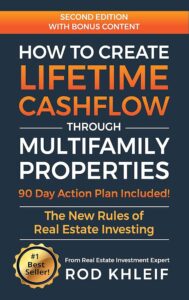
Yeah. You know, you were talking about cash flow. And back when I lost everything, I came to the realization that it was cash flow. I because I had 800 houses that just weren’t cash flowing, even though I was that 30% loan to value. So I wrote a book and I’m just going to talk about this for a second called How to Create Lifetime Cash Flow Through Multifamily Properties.
00:38:13:06 – 00:38:23:08
Rod Khleif
But the subtitle is The New Rules of Real Estate Investing, i.e. the new rules are cash flow period, and they aren’t the new rules. But that was my realization that it’s all about cash flow.
00:38:23:08 – 00:38:50:03
Russel Gray
It’s all about cash. And real equity is a derivative of cash flow. Yeah, right. And so if you had $5,000, let’s say let’s say you had a $50,000 a year coming in in passive income, right? In a 10%, market, that’s $500,000 net worth. In a 5% market, it’s $1 million net worth. Right. And so it’s what people are willing to pay for the cash flow.
00:38:50:03 – 00:39:18:02
Russel Gray
And when people are willing to pay for something that doesn’t have cash flow, it’s fake. Or when people pay way past that, what the cash flow is worth, it’s fake. And if you can’t tell the difference between prices going up based on speculation or prices going up based on cash flow, so you can use like a grim a gross rent multiplier, you can look at a market, you say, okay, a $100,000 property and it’s spinning off $10,000 a year, gross rents.
00:39:18:02 – 00:39:39:10
Russel Gray
Right? Okay. So that is a ten gram, and then it goes up and then it goes up and now it’s $150,000 property, and it’s still spitting off $10,000. Now it’s a 15 gram. But if you go over here and this property went from 100 to 150, but the rents went to 15,000. Yeah, those aren’t the same.
00:39:39:10 – 00:39:40:09
Rod Khleif
Yeah. And this.
00:39:40:09 – 00:39:42:08
Russel Gray
One real. This one’s.
00:39:42:08 – 00:39:58:01
Rod Khleif
Fake. And that’s why there’s going to be a reckoning by fake. Well, this is why there’s going to be a reckoning. And which is why right now there’s a crisis happening in multifamily. I mean, I, I, I can’t tell you how many deals I’m seeing being sold for the debt, you know, that had a lot of equity in them.
00:39:58:01 – 00:40:14:02
Rod Khleif
And so, you know, there’s a there’s a meltdown happening right now. In fact, you mentioned Brandon Turner. He just made the news for a $15 million loss on a, you know, an equity on a deal. And he’s a wonderful guy. I hate to see it. I mean, I’ve seen very, very sophisticated operators having their asses handed to them.
00:40:14:02 – 00:40:14:06
Rod Khleif
Right.
00:40:14:06 – 00:40:32:05
Russel Gray
Well, you know, this is what I mean. It’s. What were. Ken’s brilliant. Ken saw it coming. Ken started doing cash and refinances to get ahead of it. To lock is interest rates longer term? Right. And he started restructuring to make sure that the cash flows were sustainable. Because if the cash flows are sustainable, over.
00:40:32:05 – 00:40:33:06
Rod Khleif
Time you survive.
00:40:33:07 – 00:40:57:17
Russel Gray
Anything else will take care of itself. Yeah, right. And that’s why, you know, you can’t even look at your finances. Right. Wall Street would tell you a $5 million assets, no debt equals a $5 million net worth. You’re a penta millionaire. Woo. Yeah, right. You have no income. Now. You got a $3 million asset base, $2 million of debt and $1 million assets minus liabilities.
00:40:57:17 – 00:41:15:22
Russel Gray
Equal net worth. But you get $50,000 a year coming in. Who’s richer in the real world? Exactly right. And so? So. But they don’t focus you on that. They focus you on the your net worth. They do it on your 401 K. They do it in the stock market. Everybody talks about the Dow Jones up the Nasdaq up and down.
00:41:16:03 – 00:41:40:21
Russel Gray
Nobody talks about PE ratios. Nobody talks about cash flow. Nobody talks about dividend yields. And they don’t even like to talk. You mentioned gold. Nobody likes to talk about gold or real money. So it’s about sound money and real assets. Real that produce. So it’s sound it sound money real assets and productivity. If you invest in those three things you’re going to have resilient wealth.
00:41:40:22 – 00:41:41:04
Rod Khleif
Yeah.
00:41:41:10 – 00:41:48:22
Russel Gray
And resiliency is so much more important than having these giant sugar spikes of equity and then having the rug pulled out.
00:41:49:00 – 00:42:13:19
Rod Khleif
You know, your the best strategy in real estate is to hold it, but you’ve got to have the resilience like you like Kenny Kenny has his you know. Yeah. He he mentioned that when I had him on the show recently. You know, and it’s all about resilience because if you can hold the real estate, my God, your golden I period in of story that the because it it just keeps it keeps and.
00:42:13:19 – 00:42:17:12
Russel Gray
It’s not just the financing structure. You got to get the market right. You got to of course.
00:42:17:15 – 00:42:18:19
Rod Khleif
And of course, of course, of course.
00:42:18:20 – 00:42:43:21
Russel Gray
The demographics right. You got to get the management right. It’s a business correct. And a lot of people get into it because they think it’s like a stock and it’ll just take care of itself. No. Right. This is a big mistake. If you want to be a main Street investor, you’re either going to be great at picking great operators or you’re going to become a great operator, great, because if you don’t invest in great operators or become a great operator, you’re throwing your money away.
00:42:44:01 – 00:43:09:02
Rod Khleif
This is what you know, this is, you know, I’m blessed to say, in my coaching program, we’ve only lost one deal that I’m aware of, and I don’t think. I think 300,000 units, we’re counting it. We’re about 275,000. We know we’re missing a ton, but, you know, it’s because, you know, the conservative nature of what I teach is, and, and because of my own losses, you know, because my own seminar and we call it.
00:43:09:02 – 00:43:26:14
Rod Khleif
But, let’s talk about eye for a minute. Give me your thoughts on the impact. You know, you feel like there’s a reckoning economically in this country, and I do, too. And I hope it’s not as bad as I think it could be. But, of course, again, the thing to remember, with crisis comes opportunity. So don’t fear it.
00:43:26:16 – 00:43:48:01
Rod Khleif
Anticipate and plan for it. But talk about I because I can tell you what we’re doing, which is just groundbreaking. You know, I’ve we’ve implemented Open Claw where it’s a standalone machine, and it’s basically doing 95% of my my marketing team’s marketing right now. It’s extraordinary. In fact, we’re we’re going to start implementing it for other companies.
00:43:48:01 – 00:43:50:08
Rod Khleif
But what are your thoughts on the impact of AI?
00:43:50:13 – 00:44:15:21
Russel Gray
So I think there’s a couple things with AI. I think it’s a subset of a bigger solution, which is good. And it’s the flip side of opportunities problem. The flip side of problem is opportunity, right? They go hand in hand. You can’t have one without the other. So you just have to accept that if you are a young person out there and you are being trained to do a job, to be a cog in a machine, AI and robotics are a threat to your livelihood.
00:44:15:21 – 00:44:32:10
Russel Gray
Yes, if you are an entrepreneur who are going to use AI and robots in order to improve productivity, you are sitting on a goldmine right now. You need to decide which side of that fence you want to be on. I think it’s a no brainer you want to be an entrepreneur. It’s why I created the Main Street Capitalist Show.
00:44:32:10 – 00:44:52:15
Russel Gray
I’m working on a program called Main Street Startup, teaching people how to start businesses from scratch with nothing except and focus on the handful of skills they really need to have. One of those skills is going to be AI, right? You got to learn how to use it. Now, the part of the bigger solution that it’s going to bring is productivity.
00:44:52:17 – 00:45:15:16
Russel Gray
The only way we get out of the economic mess we’re in is we have to do two things, and we have to do them concurrently. We have got to fix our financial system and get out of the fake money system. We’ve got to get back to real money and a sound financial system. I think a lot of what’s going on geopolitically is taking us there.
00:45:15:16 – 00:45:35:12
Russel Gray
I hope I’m right. We’re going to find out. The second thing is you have to become hyper productive. It’s it’s physically impossible for us to cut enough. And, in at the current rate of production, to be able to deal with the level of debt that exists in the world. So either it’s all going to collapse and take equity with it.
00:45:35:12 – 00:45:57:00
Russel Gray
You need to be prepared for that. So your defense is to build a basis of investing in things that cash flow, that serve basic human needs and are essential. Right? If you’re doing that, then the odds of you surviving whatever disruption happens are going to be much higher than if you’re out there on something. A little bit more fringy.
00:45:57:02 – 00:46:16:12
Russel Gray
But I think that we’re going to have hyper productivity. I did a talk at Best Ever Conference year before last. It’s up on my website. Russel gray.com. And I talked about what I thought the Trump agenda economic agenda was going to be. He was six weeks into his presidency. I said, I think the guy thinks like a builder.
00:46:16:12 – 00:46:34:19
Russel Gray
I’ve been studying him way before. He was a politician because he was a real estate guy. He’s the only guy ever sat in the white House I’ve actually ever met and talked with. Right? I’m friends with people who worked many years with him. They spent a lot of quality time with his long time attorney, George Ross got a chance to ask a lot of behind the scenes question.
00:46:35:00 – 00:46:53:03
Russel Gray
So the guy looks like he’s a chaotic mess. I don’t believe that’s true. For a minute. I think he’s got an agenda. I think it’s very clear. I think part of his power and his technique is to keep everybody off balance all the time, and it drives all the prognosticators and everybody who’s trying to play off him or manipulate him crazy.
00:46:53:06 – 00:47:14:00
Russel Gray
Now am I saying he’s perfect? He walks on water. No, no, no, I’m not saying that at all. Am I saying he’s going to be successful? No, I’m just telling you what I think he’s doing. Yeah. And what I think he’s doing is focusing on revitalizing Main Street. When I asked him, what’s your what’s the Trump administration’s, policy look like for housing, he goes, one word answer.
00:47:14:00 – 00:47:35:18
Russel Gray
He goes, jobs. I’m going to create jobs. That was it. And you look at the idea that so many people in investing have spent time looking at, monetary policy. What’s the fed going to do? When’s the next lifeline coming from the fed? Fiscal policy. What’s the government going to do when the next lifeline of money coming in from the government?
00:47:35:18 – 00:47:56:23
Russel Gray
What they haven’t been looking at is trade policy. When is foreign capital going to start coming in and building up main Street? Trump has been primarily focus on that. And he’s using fiscal policy primarily military and also in AI and energy to to drive Main Street productivity until he can get these factories back. Right. So this is what’s happening.
00:47:56:23 – 00:48:18:05
Russel Gray
So I think we’re in this lag right now. That is going to be epic. If you’re a millennial or a Gen Z out there young person coming up, please don’t be discouraged and don’t sell capitalism out. Right. Crony capitalism monopolies I’m with you. Get rid of it. Right? We don’t need that. But we need we need entrepreneurs who start real businesses on Main Street.
00:48:18:06 – 00:48:19:18
Russel Gray
There’s going to be a lot of them.
00:48:19:19 – 00:48:21:17
Rod Khleif
Or buy them and and build them up.
00:48:21:17 – 00:48:39:00
Russel Gray
But but AI is going to be the key. So so right now, if I’m a young person and I know I can figure out how to raise capital, I can do an owner carry back on a boomer business. Somebody who is afraid of AI doesn’t understand AI. Most of the drive and hustle, he’s just riding the wave. Lazy landlord syndrome.
00:48:39:00 – 00:48:53:03
Russel Gray
If you will. You’re going to have an opportunity to buy that business, have that, that guy or gal who started that thing, sit on your board, be an investor in your business, and then you you bring your young hustle and AI and robotics into that.
00:48:53:03 – 00:48:54:07
Rod Khleif
And social media.
00:48:54:07 – 00:48:56:17
Russel Gray
You are going to kill it, crush.
00:48:56:17 – 00:48:57:13
Rod Khleif
It, kill it. Yeah.
00:48:57:14 – 00:49:20:11
Russel Gray
And and that’s going to get America out of these doldrums. If if we do not allow the Federal Reserve to print that productivity away right, right. Because that’s what will happen. That’s what they did with the.com.com price of everything should be cheaper. The natural order of things is deflation right. The fed didn’t inflate 2%. They say our targets 2%.
00:49:20:11 – 00:49:44:14
Russel Gray
But you’re an entrepreneur. If you drove your cost down 20% and they pushed the price up too, they sucked up 22%. Yeah, right. And so if if we let the financial system, we let those wizards on Wall Street and in the Federal Reserve steal the productivity gains of AI, it is going to be the biggest miss in American history.
00:49:44:14 – 00:50:01:10
Russel Gray
Main Street has got to stand up. Main streets got a demand, a sound money system. And then we got to go produce like nobody’s ever produced before. And then we don’t have to back down from being the most prosperous, greatest nation. But it won’t be fake. It’ll be real. And that’s what we need to get back to.
00:50:01:10 – 00:50:20:13
Rod Khleif
Oh that’s beautiful. Love that man. Love it, love it. Well, I really appreciate you coming on the show. If you guys are interested in following Russel it’s Russel gray.com spelled gray y. And, this has been a real hoot for me. Buddy, I got to tell you, I’ve really enjoyed myself. So I appreciate you. I’m really glad you’re in the area where you could.
00:50:20:13 – 00:50:27:10
Rod Khleif
We could do this in person like this. And, would love to have you back sometime. So, I appreciate you coming in, my friend.
00:50:27:10 – 00:50:28:17
Russel Gray
Appreciate it. Thank you so much.
00:50:28:17 – 00:50:29:04
Rod Khleif
You bet.